Category: Things You Should Know

  • Finding the Truth.

    Finding the Truth.

    I don’t think I have to remind you.  This year is an election year.

    Aside from the circus to find America’s overwhelming consensus (51%?) for POTUS, every local and civic-level idea will also need that old democratic push.  

    Do local roads need to be redone?

    Does the high school needs a new weight room?

    New DA for the county?

    Ok, not into politics? 

    Me either.  My jam is human performance and longevity, so how about ideas that hit YOU personally? The truth about human performance.

    What are the best foods to eat to stay healthy?

    Best shoes for running on pavement?

    How much should you lift if your back is a bit sore?

    Pillows for neck pain?

    Just “Google it” doesn’t work well when the information available is enormous.

    Indeed, we’re at a level where the information you get will be pre-packaged as “confirmational bias” based strictly on what you enter in the Google search bar or how you phrase the question to Siri or Alexa.

    For example:  

    Daily in my clinic, I am asked each of the above questions, and then my all-time nemesis…”How do I best stretch (this body part)”

    Maybe that’s why you came to this page in the first place.  To learn a new stretch that holds the key to unlocking your misery.

    The problem is: You probably don’t need to stretch that, and even MORE LIKELY, stretching is THE CAUSE of why you aren’t recovering.

    It’s maddening.

    So how do you get to the TRUTH?

    For Six Years, I’ve added articles and podcasts to this site.  This year, I learned something that will forever impact my life and has made me a 100x better doctor and decreased my stress levels at work by at least an equal amount.

    Like most of the ideas I share on here, I got this from someone smarter than I.

    Let me introduce Dr. David Eagleman to those who might not have heard of him yet.   

    He’s got a huge list of credentials as a professor at Stanford and the host of the Hit podcast “The Inner Cosmos.”   He’s a thinker and better yet, an explainer.  A teacher and he recently tackled the idea of finding the TRUTH in a series of some of the best lectures (on podcast) I’ve come across.

    One of the people that make my list of, “People who have changed my life without ever having met them.”

    He explains:

    “Everybody is going to have their own truth, because we are coming from a different perspective and a different set of experiences.”

    First, I’ll emphasize what he states, that for most people, they aren’t actually even looking for the truth anyway.   More than likely, (please see episode 40 of The Inner Cosmos, ) “For most people, the search for truth is nothing more than a confirmation of what they already believe.”

    I see this every day in my clinic.  From clients as well as myself.

    On this topic-

    “It’s not that one of us is misinformed, and we need to convince the other person that our way is correct. It is more that there is no correct. We come from different perspectives, experience, and ideals.”

    We are looking at the same thing but seeing it through different lenses. 

    You can think that your idea is spot on, and you can find and possess mountains of evidence to support that idea, stretch, candidate, expense, shoes, pillow.   TikTok and Insta can show you “proof!”    But that’s only because you found something that you already align with.  It’s confirmation, not truth.

    Let’s simplify.

    Even the best version of yourself and the over-stressed/hectic version of yourself are two very different people.

    This idea isn’t strictly psychological either.  It’s literally not the same you.

    Different times, different locations, different hormones and brain interactions.  You physically can NOT operate or make the same decisions when you are feeling stressed and overloaded.   Different Truths because of different lenses.

    Even to trust your own decision-making. 

    Here’s the science

    Survival emotions, fear, anger, disgust, shame, and sadness operate under cortisol.

    At the other end are joy, excitement, love, and trust, which operate under oxytocin.

    We’re talking a huge difference in brain interactions here!

    Now multiply that by 8 billion+ with people from different cultures, upbringings, experiences, and thought processes where some of them were cut off in traffic and haven’t slept in 20 hours while others just received their first kiss and yeah…

    Truth.

    It’s maybe not such a tangible thing.   I’m up there with Dr. Eagleman when I think it’s okay not to take these ideas so personally.   You don’t need to prove your point and most likely can’t.   It Doesn’t mean you can’t be friends OR that the person behind a different opinion is uneducated and dumb.   It’s not “woke,” enlightened or wrong.  It’s simply their truth at that particular time and location.   It is available for change, modification, and evolution as experiences change.  

    Like everything I share on this page, I hope this helps dial back stress, makes you think a little bit, and introduces you to a host of smart guys and girls out there right now pushing philosophy, thinking, modern ideas and healthy insight to those searching.

    For more on truth and fantastic examples that will impact you immediately- my whole “Awareness changes Perspective” vibe-check out Eagleman’s podcasts on truth and a host of other great stuff he’s working on!

  • Football “Cheat Sheet #3” -Know the game.

    Talk the game like a PRO.

    This is the “fun article” of the group. (link to #1 new to the game) and (link to #2 – positions)

    Down and Distance. The play will nearly always start out “1st and ten.” This is the offense’s first attempt to go for ten yards to get a new set of “downs.” I get it; the idea is to get a touchdown, but 11 players are trying to stop that -so the strategy is to methodically work your way down the field. There will be attempts to exploit a defense and take a big chuck all at once, but we’ll get to that later. For now…

    1st and ten.

    Although some coaches and teams lean more towards running and some towards passing, a 1st and ten is a 50/50 toss-up. Anything can and will happen. There is no tendency for most teams at this play. Especially early in the game, the coaches feel the other team looking for playmakers and weak links.

    If the offense runs the ball for 4 yards, the next play would be listed as “2nd and 6.” As it is now the second attempt, and they need 6 more yards.

    Watch the “sticks” to see the down and distance.

    Let’s say they pass it, but it is dropped. That’s not a fumble as the receiver never had possession, even if he touched it. A dropped pass is “incomplete.” It’s a dead play; nothing happens further. It is now “3rd and 6” as they still get their 4 tries to make it ten yards.

    Now pay attention.

    The offense needs 6 yards. That’s not easy.

    Most likely, they will pass the ball in this scenario. Passing the ball typically can gain a team more yards. A pass can bypass the huge lineman, and although there is a risk of another incomplete and zero yards, a 2 yard gain on the run doesn’t really help their chances. Recall that on 4th down, an offensive team typically punts a ball to get better “field position” as if they miss the “First down line,” the opposing team gets the ball right there. A punt is needed often in a game, so the O coach knows how critical a third down gain is.

    “3rd and long,” let’s say 9 yards or more is a sure pass. It’s practically the only option.

    You’ll start to see and recognize formations better suited for passes and may notice on 3rd and long that there are 5 receivers and no running backs. The coach doesn’t need to fool anyone at this point; everyone knows it will be a pass, so he sets his team up for maximum success.

    The defense will match players as the offense switches formation.

    There are coaches above the stands “in the box” with binoculars and headsets constantly watching the opposing teams’ players to give their defense an edge with a proper matchup. The strategy is incredible, and although the “on-the-field experience” I had as a young coach’s kid was great, having a sneak peek in the box, the “war room”- was unreal!

    Some head coaches even prefer being in the box to being on the field.

    So let’s say it’s 3rd and long. The offense has extra receivers in.

    See the trips? 3 WR. (wide receivers)

    Here’s where you get to talk the game like a boss and impress the people too busy to read my articles.

    When an offensive team has three receivers on one side of the field, we call that “trips,” like slang for three. To the amazement of the romance book club, you now yell, “Watch the Trips!” “Pass…watch the pass.”

    See, isn’t this fun? You’re really doing good.

    If you want to pick it up to the next level…when an offensive team shows “trips,” the defense should also match up by taking out a big guy (either a linebacker or lineman) and installing another Defensive Back (called DB or D-back.) That makes sense right?

    If the offense has another speedy guy, the defense should as well!

    When you sub for another speedy guy, that’s called a “nickel” defense. Sub two quick guys, we call it a “dime,” and let’s say, for the sake of learning and enjoyment, it’s the end of the game, with seconds to go and the offense needs a touchdown to win. They need a miracle- their only chance is a “long bomb” pass, a “Hail Mary” (as in a prayer) so they sub in all the speedy receivers – the D matches up with all speedy Dbacks…you got, It’s a “quarter” or a “Prevent” Defense formation.

    “Trips, Nickel, Dime, Prevent, Hair Mary, Bomb”

    Wow! You’re getting great at this?

    What’s next? You’re feeling a little cocky and want to learn your kids’ passing routes?

    Ok fine.

    Now, look, every coach has their own terminology on this. Like all sports and works of life, hundreds of standard vernacular terms are interchanged. A middle linebacker is called “Mike or Mack” because it starts with an M. Strong side might be called “Sam or Slam (S)” These are as unique as the team and the coach’s preference. So ask your, kid, I’m learning my kid’s terms right now with you.

    Flour Bluff Parents – a hint – the “base defense,” meaning typical starting formation with no alterations for the Hornets, is a “nickel” setup.

    There are only 2 linebackers and 3 safeties in the “base D” as the coaches have adapted to the modern game of more passing so…Use that. Talk like a boss!

    Passing Routes (hacks)

    Like I said, all coaches have there own terms. Learn yours. Impress your son, wife, husband with a “Oh like a “Go route?”

    My buddy Brett was a fantastic receiver, while looking for info on this article I talked to him. Remember when I said in the earlier article most players don’t play both ways? Yep. I was a linebacker. A defensive guy. I covered these guys but from my perspective may have called the routes something different than what they called them. In a crazy nuance to this game, I think even overlooked by coaches, is that many players don’t learn all the positions. It’s a game a specialties. I wouldn’t think an Airforce pilot in an F35 knows how to launch a torpedo on a submarine…anyway, Brett told me many coaches use a numbering tree for routes. 1,2,3…each number correlating to the next – football can get really busy really fast.

    That said, Here’s some common generic terms.

    The receiver takes off quickly for a straight route, a long pass option for maximum gain and big yards. Some quarterbacks can throw a ball 40-50 yards in the air. This is that route.

    A “Go,” “Bomb,” “Fly” – like I said, each team has its own term. These work though, and you will hear them discussed on TV with the college and pro announcers. These may have subtle specifics. “Sail” – rounded out at around 18-20 yards, “Corner” – a more angled outside release. and “Follow” – two players with a 5-7 yard gap forcing the defensive player to gamble.

    “Post” – run 7-8 yards straight and then diagonally to the middle of the field. Post refers to the goal post (in the middle of the field)

    “Flag” – run 7-8 yards straight and then towards the endzone sidelines. Hint: The endzones all have those little orange columns that stick up, signaling the endzone. In the old days, those weren’t foam columns; they were flags. (hmmm, tricky)

    “Slant” – easy, just what it sounds like – run diagonally (slant) toward the middle of the field. “Dig” a much harder 90 degree angle continuing across the field and “Option” where the receiver has the option of where to angle depending on what the linebacker covering him is doing.

    “Stop” – run a step and stop – especially useful if the player covering you is giving you too much ground. Run a couple stops on this fool if he’s giving you easy free yards. This is often used to set up a huge play called, wait for it…a “Stop and Go!” leaving that poor chump in the dust and your star receiver off to the races!

    burned

    “Out” – a forward burst and then a quick “cut” to the outside. This is good for a couple yards but also has a huge possibility of a one-on-one coverage. If that poor kid coving your stud one-on-one misses a tackle out there in the open?! You better watch yo’self! It’s on!

    Defensive Game talk:

    An interception is a “pick” and is sometimes shouted “Oskie” – an old-school term that is easy to shout loudly. When a player shouts “Oskie!” his teammates understand that he just made a pick and they should go knock some players from the other team down because…Because this is Awesome! The D just stole the ball!

    Take a pick to the house (endzone) and (We must protect this house), and it’s called a “Pick6” – a pick for a touchdown (6 points!) – feel free to spill your Dr.Pepper during these plays.

    Sack – a tackle for a loss of yards during a pass play. The defenses version of a bomb. A huge celebrated fun play.

    Some people might see the guy with the ball. True fans see a pancake!

    Extras

    Pancake – You parents with offensive linemen need this term. The poor linemen never get the credit they deserve. When an O lineman wallops a kid so hard, the guy flies onto his back; that’s a pancake. We all want dirty jerseys, which means our kid played hard. Nobody wants grass stains on their back shoulders, tho – that means they got smoked!

    haha – that was fun, hope this helps…see you at the games!

  • Football “Cheat Sheet #2” Positions and strategy

    Let’s dive deeper into football and learn positions and unique ideas at each spot. I want you to be able to talk about the game and learn about your own kid’s unique talents in this game!

    Remember-

    I have Part #1 – “Understanding the Game” and

    Part #3 – “Talk the Game like a Pro” if you need it and are seeking more.

    Positions

    It might not seem like a fair term but typically players will be broken down into 2 general terms.

    Lineman and Skills.

    It’s sort of a misnomer, as lineman are very technically skilled, but that’s just the name. I can assure you the linemen are by no means offended by this at all. Linemen are happy to be the tough guys are are affectionately named “Meatheads, Big Guys, and Guys in the Trenches.” Linemen will spend a lot of time in practices grinding and working brutal practices of perfect techniques and tough guy ideas like blocking and pounding and overpowering the opposition.

    Skills guys will spend their practice time perfecting routes, footwork drills, improving their ability to catch the ball, speed head positioning, and technical decision-making ideas. They spend about half their day in strategy sessions and perfecting routes and plays.

    Offensive positions.

    Linemen

    I’m going to start with the big guys. The unsung heroes who may spend their entire career never touching the actual football that yet are the critical components of any football team. Football teams will win and lose on the backs of their lineman.

    Because they aren’t the ones doing the actual scoring, they tend to remain in the shadows, but this sport was built for them. It’s the Battleground. The offensive lineman set the wall to allow the quarterback a few precious seconds to make a good pass and set the lanes and lines for the running back to find the hole to explode with the runs.

     If the offensive linemen are having a good day, the offense as a whole will have an easy time of it. If the offensive linemen are struggling, so is the team. 

    I often hear parents in my clinic tell me their kid doesn’t have a crucial position because they don’t hear their name over the loudspeaker; however, the linemen have their own group Persona. More than any other position, they emphasize team over individuality and often are the heart and soul of the team.

    There are three named positions for offensive linemen.

    Center:  

    Aptly named as he is in the middle.  This player snaps the ball back to the Quarterback each play. In my opinion, this is one of the most significant changes in position in the last 20 years of football and one of the coolest positions out there. Aside from having to have a perfect snap every play. Centers are often uncovered by a defensive player, and their role is to get down the field a few yards and trap one of the linebackers.    It sets up a second-tier wall allowing a running back to gain extra yards each play, often blindsiding the poor linebacker in his wake. You want to watch the center. There’s a lot of action that happens there.

    Guard: 

    On each side of the center is a guard.    The guard’s primary responsibility is to protect the quarterback during passing plays, allowing the play more time to develop. On running plays, guards will not simply drive forward but “pull” out to a side.   A Pulling guard is dangerous.   A big dude with a head of steam is like a Mack truck coming your way.   A good running back will follow closely behind, allowing the guard to pave the way for success and yards.   

    Tackle:  

    Outside of the guards are tackles.   These are typically the biggest guy in the game. They are essential for an offensive team because their position requires them to protect the quarterback from the most dangerous player on the defense. They have to be the biggest and typically the strongest with exceptional footwork to take a strong, determined defensive player given the task of getting to the quarterback while often moving laterally and even backward. It is an incredibly technical position, and aside from the quarterback, in the NFL, he is usually the second highest-paid player on the team.  Tackles don’t tackle.  They stop people from attacking.    

    Calculating and Effective, the QB is the Captain of the ship.

    Skilled positions:  

    Quarterback:

    The captain of the ship is the quarterback. This player will have the ball every single play. They will either hand it off to a running back, keep it themselves and try to run in a scramble or drop back and set up a pass. They are the strategist. They are The Playmakers. The quarterback must have crazy athleticism and a quick processing brain.  As there is constant decision-making, It is both the most crucial position, and the most pressure felt. They are the coaches on the field and have a tremendous amount to do with wins and losses. Much like a pitcher in baseball, a lot comes down to the quarterback’s performance.

     Running back:

     This player is usually set up very near the quarterback. As the name would imply, the ball is often handed off or thrown to them with a short pass. They are highly skilled and typically some of the strongest and fastest players on the team. They have to have the ability to hold onto the ball well and not be knocked down easily. They also have a vital role in blocking on a pass play to pick up anyone that might get through.

    The running back is also the position you want to know because offenses will show multiple setups. For example, you will most likely be able to tell if the next play is a running play or passing play based on how the running back is set up or by noticing when there are multiple running backs in the same formation. Because of this, coaches often shift running back around as part of the strategy and trickery.

    That’s Nelly right there jacking some poor fool. His man gets yards he needs and his team stays on the field!

    My brother-in-law Nelly would never let me get away with leaving it like that. There are typically two types of running backs. The classic Half back or H-back and the Full Back. The full back, much like the classic style tight end is starting to be a bit more of a rare position. These are typically big athletic guys that have the job of getting a head of steam and creating devastating blocks.

    They create giant holes and gaps and are utilized when a team needs to get that extra yard -either for a first down or a touchdown. Many teams will also sneak a full back out for a pass in a pinch, surprising the defense, which may have left him unaccounted for and uncovered.

     Receivers:

     These are the players that are typically split out away from the lineman. They are either on the line of scrimmage or just one step off of it. Typically, they are the players with great hands, catching the ball while moving, and tremendous speed. An excellent wide receiver can change a game. Another unique aspect of a receiver is that Frequently the coaches will set up a play to get the receivers in a one-on-one battle if a wide receiver has a speed, athleticism, height, or another advantage over the player covering him.  That is an opportunity that a promising quarterback or Coach can exploit for a big play.    Wide receivers may not get a lot of action in one game, but when they do, it is typically a crucial play with huge implications.

    A wide receiver that can block down the field is an underlooked skill at this position. For example, during a running play, if the running back gets into the next level- one good block from a wide receiver can turn a 5-yard gain into a 70-yard touchdown!  Coaches see this and often choose wide receivers that put the team before themselves and will block.   Your kid may be a receiver but may play a perfect game, having not received the ball. This is a huge change in the game from a generation ago– blocking receivers are a commodity.

    You may hear your kid talk about the positions: A, B, C, F, X, and Y.    These are specific wide receiver positions with particular roles; the letters designate where on the field they line up. 

    Tight End:

     Much like the center position and blocking receivers have changed the face of football over the last 15 years, the tight end position has also changed tremendously. Like its namesake, the tight end used to be on the very end of lineman. Almost an extra tackle, typically used to block during run plays. And indeed, still today tight ends are often hybrid players, sometimes playing a wide receiver and sometimes playing as an extra lineman. The tight end is a huge part of how the formation is set up in the football strategy.   

    But more often in the modern game, You often you cannot distinguish a tight end from a wide receiver as the modern game has much more passing than our grandad’s era.   In many coaches play books the tight end is listed with receivers.

    Kicker:

    The kicker is used primarily as a scorer for field goals and extra points and has a considerable influence on the final score of the game but also is often not given enough credit for trading field position. At the beginning of the game and after any score, the kicker is in charge of where the opposing team starts. Great field position equals great field success.

    Punter:

     As I mentioned, if the O does not go for it on 4th down but instead wants to punt, this highly specialized player, typically only used for particular situations, comes on the field. For a punter, it is all about field position. Give the defense the best chance to stop the opposing team by pushing the ball back deep into their territory.   They are superstars if a punter can repeatedly get the ball into the opposing team’s 20-yard line. If they can do this inside the 10-yard line consistently, they can make a career of it.    Good punters can get up to 50 yards and sometimes more field position. Much like a lineman, they are unsung heroes who don’t get nearly the credit they deserve.

     As I mentioned many times, football has incredibly skilled and specialized positions. Each position will practice only those skills that are needed for their success. In most practices, these different positions aren’t even practiced together. They break out into individual groups.

    So it is infrequent for any player to play multiple positions. Someone that is a skilled tackle would not be a prime running back or wide receiver. Not only did they not have the same skills needed for that position, but they often didn’t have the ability or time to practice that position. At times, you will see position changes among linemen, and constantly running backs and wide receivers may have interchangeable roles as part of their strategy. Sometimes, some athletes are so good at the high school level that they may be the kicker and wide receiver. But you don’t see this at the high levels.

    Defense:

    Linemen:

     Like the offense, the guys in the trenches on the defense are called linemen. Your kid will typically tell you they are an offensive lineman or a defensive lineman. The defensive lineman’s job is to create havoc.

    In a passing situation, they are trying to get to the quarterback before he can pass the ball, and if they tackle the quarterback while he has the ball, that is called a “sack.”  A Sack for a defensive player is like a touchdown for an offensive player.  It is a huge play with tremendous implications and is typically celebrated fantastically!

    A defensive lineman also will have some particular roles to play with positioning, often taking on two or even three players at one time to free up the players behind him to make the play.

    They are typically listed as a defensive Tackle (inside) or End (outside) – Some teams run a defensive Nose Guard as well, who plays directly across from a center.

     Linebackers:

    Linebackers are known for being exceptionally good-looking while at the same time, wreaking havoc on offenses.

    As the name implies, these are the players behind the lineman. Just like the offense, there are many different positions that defensive coaches will throw out to confuse or trick offensive teams. Sometimes there are two, three, or even four linebackers. These are typically bigger, athletic guys who are fast and run all over the field expected to make most of the tackles. It is an important position because they are the run-stoppers on running plays and will drop back into pass coverage during passing plays.

    In conjunction with their lineman in front of them and their defensive backs behind them, they will have set positions they are expected to be in during particular plays. One mistake in these positions can allow for a massive gain for the opposing team.

     Defensive backs:

     Much like there are multiple wide receivers on the offense, the defensive backs also have numerous unique skill sets yet are collectively called “d backs.”

    Defensive backs are typically divided into Cornerbacks and Safeties. 

    Cornerbacks are the widest playing defensive players on the team. (on the corner) These players often cover incredibly fast, capable wide receivers in a “one-on-one” fashion.  Usually, these are the fastest players on the team because the dependence on them is so strong. Aside from being able to cover fast players on a pass play the importance of an excellent cornerback to set a wall and turn running backs inside or make a tackle in open space is a major determining factor for more playing time.

    Safety:   Matching up with the running backs on offense, typically there may be two or sometimes three safeties playing defense. Although their primary role is to stop passes and offer support for the cornerbacks, they have a huge role to play in stepping forward and stopping runs. Because they have no linemen in front of them, they often have some open space to get a head of steam and will offer devastating hits and tackles. It is a fantastic position because they have space, giving them an extra second –  the extra time allows for sound decision-making.  The safety is responsible for a lot of the interceptions and game-changing plays that happen in football.

    A speedy and smart “Return Man” is a dangerous special teams weapon for any team.

    Special Teams:

    Aside from the kicker and punter, there are special team players for the specific special plays. There is a special Center called a Long Snapper, tailored lineman,  gunners,  holders, and Corner “attack” positions designed to block field goals, return men, and all kinds of different position setups, especially for the special teams. As I mentioned earlier, the Special Teams is often the first intro into the game for Field Time. The kids playing special teams are often the hungriest and we’ll scrap for every inch.  Special teams is unique, especially in the high school game because it’s often not the part of the game the coaches spend the most time on. These positions are incredibly critical however and as you work up to the ranks of college, better colleges and into the pros, these specialized positions become much more important and sought after. A good long snapper is an NFL career. A special punt returner may make millions.

    There you go… positions!

    Lets get just a few key tips in that will have you talking the game like a champ.

  • Football “Cheat Sheet” #1 Understanding the Game

    Football “Cheat Sheet” #1 Understanding the Game

    I love football. It was my college sport and dear to my heart. There are positions for big strong guys and speedy, shifty quick players. It’s the sport for the super brainy chess-playing type strategists while having room for complete meatheads.  And I mean that lovingly.  I tell parents, “Most kids go through school with a few close friends; I had 25 best friends and 70 brothers.”

    This is an exciting time for me as my oldest is starting high school football. He’s played flag football his whole life, but this is the first time he’s strapped on his pads to enjoy the true Friday night American tradition.

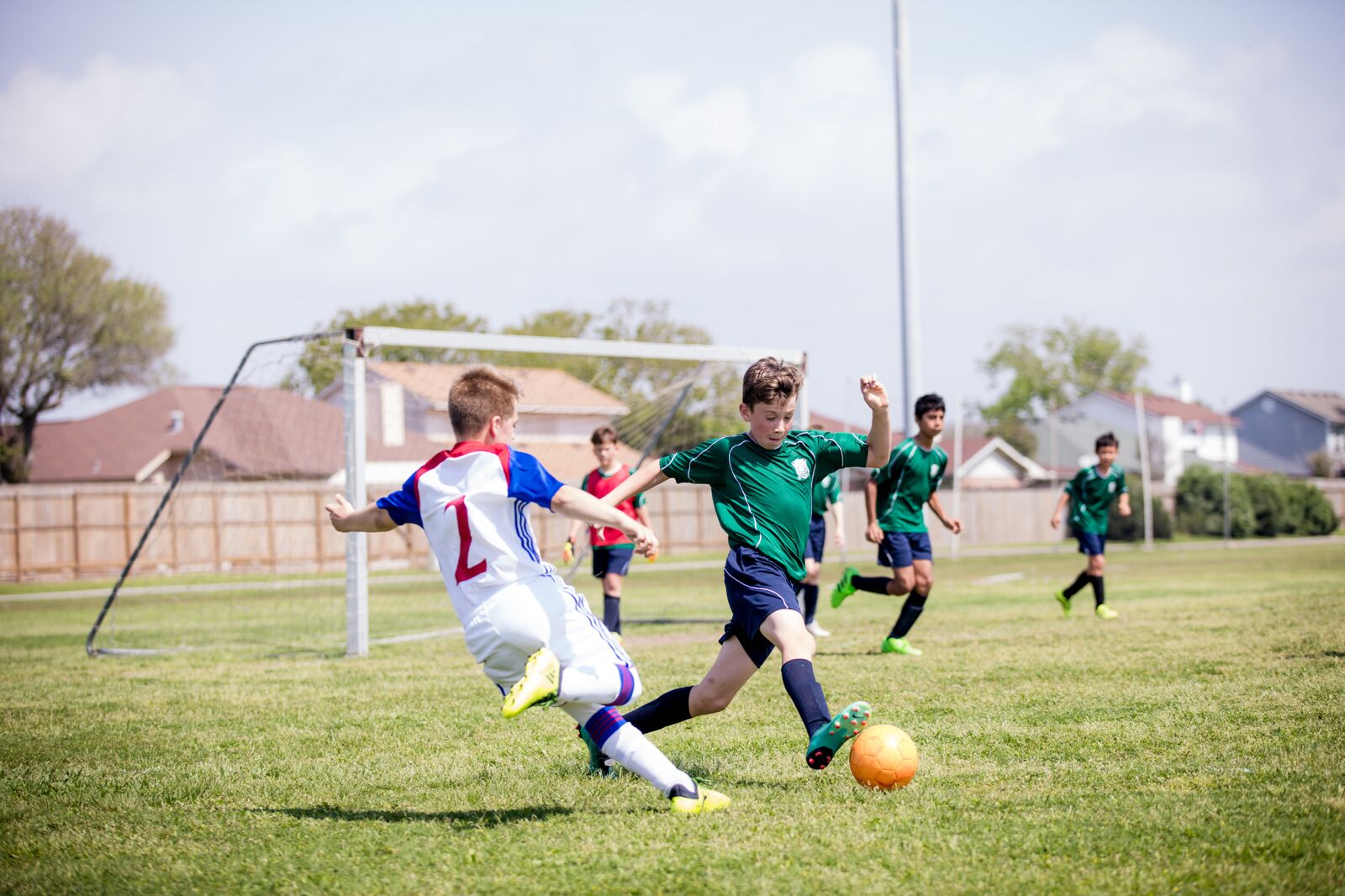
    As a youth soccer coach, I always start the year by telling parents, “I am going to teach your kids the game, but I care that you understand it as well.”

    Nothing is more troublesome/hilarious/sad than a mom standing up and screaming the wrong thing at the wrong time or a dad strategizing that the coach needs to “just get my kid the ball.”

    “I’m glad you came, but. Umm, That wasn’t really a “thing.”

    Like I’ve done for soccer and basketball, this article will lay out a quick “cheat sheet” for you as a football spectator to get us all up to speed. Hopefully, this helps you get a deeper understanding and love for the game faster than just sitting through games and trying to pick it up through osmosis. 

    I want you to be a FAN of the game.  I want you to see the beauty of football and see what your kid is working on and improving.   While every player will not see the ball, each player has a specific duty to do each play.   The coaches will later analyze the game with hours of review and grade your player on each and every play.  There are no plays “off” so you must have an idea of what is expected to maximize the enjoyment of watching your child’s success and development.

    We’ll start this journey with basics, and then I’ll get into terminology and wrap up some strategies.

    Suppose you’re happy with the basics, great!  You’re ahead of the curve. But feel free to dive deeper into part 2. It will give you the insider’s eye that makes football so incredible.

    Link to #2 – positions in football and strategy

    Link to #3 – how to talk the game (a fun article that helps you relate and talk like a pro)

    First off, it’s ok that you don’t see everything that is happening.   Football is a real-life chess game full of strategy and positioning and is often described in terms of “War rooms, Trenches and Battle!”

    I grew up as a coach’s kid, on the sidelines and locker rooms since I could walk. So I have an insider’s experience. 

    Coaches’ summer programs even play “virtual games” where they will “chalkboard” up scenarios of: “If you do this,” then “I’ll do that,” and strategize how it plays out.

    But, unlike the chess model, the nuance is that momentum, excitement, athleticism, and luck have HUGE determining factors in this game too.  It’s sports at its finest.   One particular standout player can change the entire dynamic of what a team’s success looks like.   So prepare to get caught up in the athleticism, emotion, energy, dramatics, and beauty of it all.

    Basics:

    The team that has the ball is the offense. They are trying to score.

    The team trying to stop them from scoring is the defense. 

    Like most sports, there are two ways to win.

    Score the most points or stop the other team from scoring.    Both are equally important.   

    There is one notable caveat with football compared to other sports –  Most players only play one side.

    It is rare to have a kid “play both ways” in high school. This happens less frequently in college and only once a generation in the pros.

    So the fact that your kid doesn’t play often and may never in his entire football career score a touchdown isn’t something you should be too worried about. Playing defense, being a lineman, and setting the perfect block are badges of honor—team before Individual.

    True, some positions tend to get more highlights and their names announced over the speaker system more often, just like a pitcher is highlighted in baseball. However, the big guys that play down on the line who may go their entire career well into the NFL, never scoring a single point, are just as crucial to the team’s success.  Maybe more so.

    More than any other sport in history, football is all about Teamwork.   It is a sport of positions and working as ONE, and why anyone deep into their love of football will tell you that it has some very real-world, real-life implications.

    Touchdown!

    Scoring:

    The offense is looking to score a touchdown– worth 6 points.

    When they score a touchdown, they then have an opportunity to score an extra point by using a kick-off (called PAT, “Point after Touchdown” or “extra point” ) by kicking the ball through the uprights. 

    So the usual and standard football score would be 7.

    It is common to see football scores of 21-14 and other multiples of 7.   (one team scored 3 touchdowns and one team scored twice.)  

    “Go for 2!”

    Rather than kicking a standard extra point, if the coach feels they need more, they can elect to “go for two.”  

    The team then has one chance and one play only to get back into the endzone for a “2 point conversion”    

    So a successful attempt would total a score of 8.  It might seem confusing at first, but just think of it like a 3-pointer in basketball or free throws—it’s just a risk vs. reward scoring option.

    The kicker can also be used if a touchdown is not scored.   Kicking from distances ranging way out for a 3- point “field goal.”     These are game changers and are very important in the game.   They have significant risks, especially when attempted from farther out.    A good kicker changes the game.    

    Of note:   It’s just the way Football works out.    The game’s final play will often come down to the very last second, where a 3-point field goal will make the difference between a win and a loss.    It’s a pressure situation that is incredible to watch.

    There is one final scoring opportunity that is rare but cool to witness.    There is a:

    It’s mandatory that every single person in the stands shows the “safety signal” and screams crazily when it happens in a game. If you don’t know, now ya’ know.

    2 point “safety.”

    This probably will only happen once a season for a team. It is so rare, but I want you to be the first to yell, “SAFETY!”

    If the defense tackles the offensive team in their own endzone, (as if the team is 100 yards from scoring) the defensive team is awarded a 2-point safety, AND the offensive team has to kick off.   It’s a tremendous swing for one team and a HUGE momentum, game-changing play.

    A safety is one of the biggest plays in the game and is typically done by a player that doesn’t have a fancy position where they are the star of attention. Of course, as a former defensive player, I’m biased – but in my opinion, this is the biggest play in the game!

    So now you have the scoring down.

    6-point touchdown with either a one or 2-point extra point attempt.

    3-point field goal 

    2-point safety.     You get to do the math!

    My wife and I used this with our kids growing up.   “Braylon, how could a football team score 27 points?”  (4 touchdowns and 1 missed extra point) or (3 touchdowns and 2 field goals), etc.

    Playing

    The offense is allotted 4 plays to make it ten yards. 

    They can run a ball, pass it or use other forms of possession to give their team opportunities and options.

    Each time they make ten yards, they are awarded a new “first down” and have a new set of 4 plays to use again.    Of course, they can and want more than ten yards and a touchdown, but many strategies are involved in setting up big plays and huge gains.   A coach will often call a simple run play in the middle to “suck in” defensive players or lull them into being a step behind or peeking the wrong way to exploit the defense later. (think chess and strategy) These are setups.   Grinding running plays also keep the clock running and is a great way to speed up the game when your team is ahead.   The team that controls the ball longer generally has a better chance of winning the game.

    The defense then has a primary job of stopping the offense quickly to ensure their team gets it back.  A great defense should play less.   As a defender, my best games may have only had me in action for 40 plays.   That means we were doing a great job.    That’s important to note if you feel your kid isn’t getting enough action.  Maybe he’s just having an awesome game!

    The defense attempts to stop the offense and not give up the ten yards.   If they stop them on the 4th attempt, they win. Their team gets the ball back on what is (easy to remember) termed a “turnover by downs.”   

    4th and goal may be the most exciting play in football.

    More often, the offensive team will elect to “punt” the ball on their 4th down to cover more ground and set their defense up in a better position to be successful.    

    If the O elects to “go for it on 4th down.” this sets up one of the most exciting plays in the game as the stakes are incredibly high. Quadruple the excitement on “4th a GOAL!” where the result is either a touchdown or a change in possession!

    Defense:    The defense is trying to stop the offense.    If they catch a pass and steal it away from the offense, it is called an “interception.”    It is a tremendous play.   They now are the offense.     If the offense “fumbles” a ball and loses it in space, the defense can jump on it and steal it.  

    These are called “turnovers,” the same term as basketball steals.

    If, as I mentioned earlier, when the defense picks up a fumble or intercepts a pass, the play continues, and the defense has the chance to “take it to the house” and score their touchdown- a monumental swing in points and a giant momentum swing for the team, fans and staff.

    You’ll see a considerable amount of nuances with offense and defense.  Ask questions, start to anticipate strategy, watch critical matchups, and begin to see where a team has an advantage they can use.    

    That’s a great intro to offense, defense and scoring, but you must be aware of special plays.  Also correctly termed “special teams.”

    Special Teams are the set plays that happen for the additional third of the game.    Maybe not as frequently as offensive and defensive lineups, but a more significant margin for scoring opportunity and field position each time.  These are vital plays that make or break a team.  Athleticism and teamwork shine during special teams, and mistakes are magnified tenfold.

    The opening kickoff and “return.”    Punts and returns.   Field goal attempts, extra points.  These are the special teams and are key plays.

    Special teams plays are always exciting and crucial!

    Special teams are also unique in that Coaches often play some kids that might not see the field during regular offense and defense. It’s where upcoming players get a chance to get their feet wet and shine by earning responsibility and playing time.    Almost every football player through history started their football life on special teams before earning their regular spot for game-to-game plays.    These are nearly always electric plays, so get ready!

    Wow, that seems like a lot. 

    You’re doing great and understand points, offense and defense, special teams, and some reasons for the excitement when the crowd sees a play happening in real-time.   A long high ball with a chance of a touchdown or a possibility of an interception.   Risk vs. reward, athlete vs. positioning, technique, and coaching.    

    Feel free to stop there and take it in.  It will all make more sense as you see it happening on the field.  But if you want to dive into positions and how incredible this game gets, continue on as I discuss more. (link to #2)   Much like baseball, your kid will play one or two positions and get very good at those specific tasks. Some positions are better suited for bigger, stronger guys and positions best suited for top-speed athletes. The coaches spend excessive time with your kids and have a great idea of what position your kid could best help the team.

    When I explain football to my foreign friends, I typically explain it like I would the military. There are ground forces, Air Forces, artillery, missiles, tanks, close Quarter battles, and strategists. Positions in football are like this. Nobody can do it all. Football is about specialists!

    Link to #2 – positions in football and strategy

    Link to #3 – how to talk the game (a fun article that helps you relate and talk like a pro)


  • “Oh?” And other Fantastic Advice from Grammy V.

    Not the real Grammy V

    “Oh?”

    The people my age, “My Generation,” often counterintuitively slow our abilities to learn because we are fairly positive that we are the enlightened ones. As any of you that graduated in the 1990s, up and through about 2005, already know, we are the most brilliant generation there has ever been.   Just ask us.

    This isn’t just some random idea that some blogger dude writing from his breakfast bar made up, either.  There is evidence.  The advent of the Internet happened when we were in our most influential years of our lives.  So aside from all the great music and clothes, living through the change of “how to find” and access all the information planet earth has ever seen, yet also knowing that it wasn’t always this way, has made us all-powerful.  We are the transition generation, and I think largely because of this, “We know a better way.”  For everything. And we’re not at all shy about telling you.

    Sorry parents.  Oh yeah, and sorry, kids.  And students, plane seat neighbors, innocent passersby, and anyone else unfortunate to come across us.   Yeah.  We ruined social media.  It was us.  

    One hundred percent certain that our way is the right way, and if we can just yell loud enough and present enough “facts,” surely everyone will fall into our way of thinking.  Do you think politics are bad now?  Just wait until you see the next generation of “one way to rule them all!”

    But doesn’t that all just come to a screeching halt when we get some sound advice from somebody much wiser and often older than us?

      The Yodas from the generations before us. 

    Our parent’s generation?  Hell No!   We’ll never listen to you guys.  I’m talking about the people who lived through the Great Depression, not the Oil Embargo of gas prices at 75 cents and a World War that changed the face and borders of countries, languages, alliances, and the economic landscape of the planet.   (sidebar.   I’m not knocking my parent’s generation.  It’s a scientific fact that kids physically and emotionally CAN NOT listen to nor heed any advice from their parents. – I’m watching this play out in real-time with my kids.   You could have at least warned us.) 

    Nope, Grandparents.  The OG’s.   Grammy V was one of these.   

    Wise.  

    She didn’t have a doctorate degree and half of the alphabet after her name on business cards; heck, she didn’t have business cards.   That kind of stuff didn’t impress her.   She didn’t blindly trust that doctors were more intelligent just because of a dozen extra college years.   She trusted what she knew.  She didn’t talk a lot.  

    Oh, she’d ask questions to see what I thought about stuff.

    At the time, I thought she wanted my advice… “Here’s how you do this.”   

    I can see now she was just testing me to see if I was evolved enough to even have a rational discussion with her.  

    This WW2 generation talking to their grandkids is similar to the discussion of Aliens not wanting to communicate with Earthlings because they are watching our planet to see when we’ve evolved enough to “NOT try to dissect and KILL their ambassadors!” 

    Grammy Viersen could say more with one word than I can with an online platform.

    So I’m going to share something I should keep to myself.   My insider information from someone much more intelligent than me.   I learned a lot with her, and often while visiting her ranch, would stay up late into the wee hours of the morning going over something she said in passing.  Mind-blowing stuff. 

    She told Nikki and me that arguing is the planet’s most significant waste of time.   Political debates, social media rants, what food tastes better, how to look at money…a waste.   “One side wants what?  A win? There is no win.  It’s just a bunch of noise and turkeys puffing out their chests.   When I speak to someone that starts arguing or debating, even when I know they are wrong, I just say, “Oh?” with a question mark at the end.  That either stops it, or they just think I agree.  There is no arguing, nor is there even a volley return with which they can do anything.   It just ends, and we move on.”

    “Oh?”

    It’s lifechanging.

    This comes up as I was thinking about a friend and her 5th-grade son.  

    Like all good fifth-grade boys, Luke wanted with all his heart for school to end early for summer vacation.  I think he was misinformed, mixed up, or possibly, like kids that age, fooled by expectation, imagination and hope.    He had told my friend Jackie, his mom, the wrong day for the end of school.  He was 100% confident he knew, and she was 100% sure he was wrong.   Poor Jackie was not about to be shanghaied and fooled by her middle child.   It turned into a mess.   A dozen text threads, group chats, calls to principles and superintendents, and social media questions.  

    It eventually worked out, but she and Luke went back and forth for a few hours on this, both trying to prove their points like a 1990s courtroom drama at the Century theaters, “You can’t handle the TRUTH! (dramatic fist pound.)  

    Here’s the point.   

    A few hours.   Text threads.  Posts.    Debate.   It’s exhausting, and nobody gets further down the road.

    Do you know what would have worked here?  A simple “Oh?” and we’re moving on.  I’ll pick you up when school ends.

    Trump is the best President.  “Oh?”

    Here’s what you have to do immediately upon arriving at Disney World? “Oh?”

    Here’s how you tie a fishing hook.  “Oh?”

    Trump is a monster! “Oh?”

    Gas prices rise because (fill in the blank.)   “Oh?”

    And especially for all facts/idiocrasy/click clickbait’s/help/nutritional advice on all social media platforms.  Especially the ones trying to piss you off, dad.  Stop commenting and writing them back.   That’s why they wrote them!  

    And on and on for infinity.  

    You’re welcome for the extra 300+ hours a year you’ve been looking for.  That and the one less ulcer and headache because of stupid stuff.

  • Basketball Cheat Sheet for Parents

    My kids play basketball. A lot of it. My wife is a coach and I even get to run the show from time to time.

    Recently, I was asked to write a little cheat sheet for some of the parents who are new to the game. They have kids who are brand-new into basketball and are in a “catch-up” mode compared to some of us that grew up with the game and understand basketball a little differently.

    As a coach, in many sports, I have found it to be extremely helpful when the parents understand the game. It speeds up the learning curve for their kids as well as makes the game much more enjoyable to watch.

    Much like when I wrote the soccer cheat sheet for parents, the one thing I find even as frustrating as a kid not understanding is when parents in the stands really don’t understand what is going on.  “Good Job Junior!!!” (as they whisper to their friend, “What just happened??!”)

    Basketball is probably my favorite sport to watch. This is probably kind of weird because it wasn’t one of my main sports through High School. I did every sport you can think of but some sports just overlap and I was a wrestler.  These sports were at the same time. That didn’t change my love for the game, however.  I think probably because I didn’t play the game, I might be the perfect person to write your cheat sheet, as I’ll keep it basic- which is what you need.

    First.  It’s one of the greatest sports on the planet for a few different reasons.

    1. All you need is a ball and a hoop.    

    Because the sport was invented in the US, you can find basketball courts nearly anywhere throughout the country. They are at parks, playgrounds, people’s driveways, courtyards, and even hanging on barns out in the countryside. You can play this game and have fun at any age.

    1. You can watch your kids develop in super speed.

    What makes Hoops so fantastic is the fact that I get to see my kids develop at such a high level. I don’t think there’s any other sport where you see mistakes being fixed and changes in strategy being adopted in real time.

    Because of the sheer number of attempts up and down the court, as long as your kids are paying attention to the coaching, your athlete can improve his or her game from one time up the court to the second. As a coach, I love this. I care about a young athlete’s development much more than I care about wins and losses. If I see an athlete out of position and doing something wrong and during the course of 1 time out or even just yelling instructions while the athlete is running down the court, I see them fix their mistake and improve their game in a matter of seconds, it’s a highlight of coaching. It happens in basketball faster than any other sport.

    1. It’s mentally as well as physically tough and therefore rewarding.  

    This game isn’t perfect. Your kid will miss a game-winner. She will miss a free throw or possibly even miss the entire backboard on a shot. A pass will go off her nose and the ball will dribble off her foot into the stands.

    But, They will also make a shot when it really counts. You will witness your kid’s confidence swell and EXPLODE when they get something right. They will block a shot and make a steal at a critical time. They will be a part of a team that makes an amazing comeback and wins it in the last second with tears of joy involuntarily pouring out.

    Oftentimes, many of these emotions and growth factors will happen in the same weekend! It’s such a great learning tool and microcosm for life. It’s Fun, heartbreaking, inspiring, motivating.

    It’s LIFE. As a game. All the ups and downs, roller coasters, emotions and learning. It’s growing, Learning, teamwork, individuality, resilience and FUN. Sports are such a true reflection as well as practice for life. I love it!

    Ok. You know my angle. So let’s use these ideas as our backdrop for your own basic “cheat sheet.”

    Because parents, you need to be shouting the right information. Basketball, as much as any other sport, is built to be loud and have crowd involvement. Please yell for your kids!  Please cheer for your team!  Feel free to jump up and down when your kid makes their first buckets!  Please be positive!   But, make sure you’re yelling the right stuff so you don’t look like a fool.

    Cheat sheet:

    Basketball has two teams. There are five players on each team and they are going in opposite directions.   Your team is trying to score while at the same time stop the opposition from returning the favor.

    It’s one of the easiest sports to understand ever built because the team with the most points at the end of the game wins.

    That’s basically it.

    Ok, there’s more to it.  But that’s the basic idea.

     Points are scored by putting the ball through the hoop.

    There are a couple of different ways to score but typically a basket that goes in the hoop is worth two points.  

    There is a large arc in an outside area (the “Arc”) of the basket and shots behind this arc are worth 3 points.

    3 pointers are a really cool thing for kids so you’ll see even the youngest players, as they get into the game, try them.   But understand, even at the pro levels the 2 pointers, especially easy baskets on the edges called “Lay-ups” are what scores most of the points in a game.   When your kid gets the lay-ups idea down, they’ll score much more often.  

    A really basic coaching strategy that never stops even at the highest levels is, find a way to get more “lay-ups.”   Passes, mismatches, drives, screens, fakes…Get more lay-ups! 

    There’s a third way to score and that’s off “free-throws.”

    These are the shots you see with no pressure.  Kids stand on each side and let a player shoot uncontested.    Free throws happen when a player was fouled in the act of shooting and also after a team has reached a certain number of fouls.  If a team commits 7 fouls in a half, the other team is awarded a “bonus.”    Now they get to shoot free throws after each and every foul.

    Speaking of “Fouls” let’s stay with this.  Kids new to the game seem to think these are worse than they really are.

    Fouls aren’t by themselves, a bad thing.  They happen.  Each player is even allotted five fouls to use up.   5 Fouls though and you’re done for the game.    So don’t get mad if your kid gets a couple of fouls.  Sometimes a foul is even appropriate and you’ll hear a coach say, “that was a good foul.”

    Some of these are kind of wimpy.  Slapping an opponent’s hand when you’re trying to steal the ball.  Blocking not done correctly.  Setting a screen wrong.

    But, they are made to keep the game moving and to keep it fair.  It’s just the rules. 

    If a foul happens on the court while someone is dribbling or passing it’s no big deal.  The ref just blows a whistle to stop the game, tells the scorer to mark it down, and then inbounds the ball again.  

    If the foul happens when a player is shooting, she gets “free throws” in an attempt to make up for points she would have got with a clean shot.

    It’s just a neat part of the game that adds for time stoppage, substitutions, drama and pressure.  It’s only 1 point!   But you’ll be blown away how many times even just a few of these one-pointers count in the final score.  Free throws are important!    

    Even better?  An “AND ONE.”   This is where your kid gets fouled while attempting to shoot and the ball still goes in!   Even though it went in, your kid gets a bonus free throw for a chance to make that 2 points, count as 3 points.   It’s a huge play and a dynamic part of what makes this game so exciting!

    Fouls are no biggie, what drives coaches so crazy is dumb fouls.   Overly aggressive, revenge, poor timing, critical parts of the game, and not learning from past mistakes.    It’s often tough teaching young players what is appropriate and what is not with basketball. It’s just not a sport where you can get mad, press harder, and expect success.   You have to be able to keep your cool and press on.

    Moving the ball.

    In basketball, there is a lot of running and direction change  This is great for your kid and their body. 

    But, you can’t just run when you have the ball as you can in football.  

    You have to “Dribble” Bounce the ball up and down every time you move. You have to keep dribbling too. Once you stop dribbling, you’re stuck. You either have to PASS or SHOOT at this point. That’s why the kids that can dribble the ball well are so much more successful, especially when they are younger. So teach that to your kid. They don’t even need a hoop. Just a ball and they can work on their dribbling. The ability to dribble well especially change of direction, behind the back, and between legs is called, “Handles” Basketball has a “cool factor” to it that is just part of it’s vibe. Handles is definitely cool. More on this later.

    Common problems that happen EVERY game.:

    If you take off running, that is called, “TRAVELING.”   It’s not a foul, but the other team gets the ball. It’s a TURNOVER.   Turnovers change a game and what’s really cool about this is the defensive team can do certain strategies and plays to “create” more turnovers. It’s a HUGE part of the game and one of the things you’ll see coaches, parents, and fans get excited about.

    If you are dribbling down the court and STOP and then start again that is called a “DOUBLE DRIBBLE.” The same rules apply, the other team gets the ball. It’s a turnover. 

    There are other turnover nuances such as “carrying, charges, moving screens, 3 seconds, and not getting the ball across midcourt within 10 seconds.” These are things that you will start to get more adept at noticing the more you watch and understand the game. You don’t have to know all of this innately.    Listen, Ask around. Don’t be afraid to learn.  You’ll soon pick up the game and be yelling at the ref like a champ. Speaking of that.

    Nobody is perfect.

     In little kids’ games, often there is only one referee for the entire court and it’s plain impossible to watch all ten kids at once.  Be cool to the refs.

    Also, in the younger kids’ games, there is a huge push for referees to allow for the development of players that haven’t had a lot of court time. You may see one little girl getting called for traveling yet another girl on the same team gets away with three or four steps. This is just my reminder to you that the referee is not out to screw your kid and make them hate the game.

    For younger players often the simple skills of dribbling and passing are very tough. I’ve often noticed referees offering some advice to young players or being a little bit more lenient on their calls. Especially if the game is a blowout one way or another. Some parents can’t stand this. They feel it is unfair and it is a black-and-white issue. “Call it consistently every time.” 

     My personal take is, I just want kids out there having fun and I will promise you that these games mean much more to the parents than they do to a lot of the kids. 

    But, Basketball is much like many sports, it is streaky. A kid may have 10 shots go in a row! They can hit from anywhere and then something flips and they get ice cold and nothing seems to fall correctly. It’s true of the game itself. It runs in streaks where one team will score ten in a row or go on a “17-5 run” meaning they scored 17 and the opposition scored only 5. I think this happens to refs too. It’s just a part of the game.

    Ok, you’ve got dribbling down, streaks, fouls, turnovers. 

    Let’s get to some strategy.

    Understand, that PASSING is a much better way to move the ball. I think this is an underutilized skill in young basketball players and is something that gets very important the farther they get into the game. Some kids get really good at basketball before their friends.  

    Just like any sports, there are coaches out there that just simply give the ball to their best player and let that player do the majority of the work. This happens in soccer, football, hockey, and is incredibly obvious in basketball. Some kids just develop faster and have a feel for the game. Some kids practice a lot more because they love the game. But the discrepancy between great players and very low ability players is obvious in nearly every game. And, they are on the court at the same time!

    The thing that really levels out the playing fields is the ability to pass. Keep the ball moving and look for better, higher percentage shots.   If your own kid is still gun shy with shooting the ball, make sure he understands he can become the best passer and change the game!

    Basketball gets extremely exciting.  My son once told me, “Holding a basketball is like holding lightning.”

    Because of this, while In the action and chaos of playing the game, sometimes players first thought is to shoot. Even if it’s not the best idea. 

     It doesn’t take the opposing team long to realize that certain players don’t even have the ability to pass the ball because the game is just moving so fast for them. This leads to poor percentage shots.   It’s like a bad foul. 

    I love kids to shoot, I don’t care if they miss, shoot again.  But, take good shots.  

    Set your feet correctly, move the right way, don’t just “chuck it up there and hope.

    Understand that basketball is a unique sport in that the percentages don’t lie.  It’s not a “zero error” sport.  You do not have to be perfect to excel.  Even the million-dollar players in the NBA are making about half of their shots. So don’t get upset if your kid misses a few shots and make sure that your kid understands to keep taking good shots.   “Keep shooting” from your coach is a good lesson to hear.

    My own kids are in a very unique part of their development with basketball.   We often talk about what plays allow for a higher percentage shot.

    Take this example. The best player on the team can dribble down the court and despite being guarded by three players can still put up a shot. If they are really good, which often they are, the shot may still go in.  2 points and the kid looks like a superstar. 

    But, Recall -there are only five players on each team. If 3 players guard the guy with the ball that means at least two players are wide open. If they know what they are doing, the player dribbling the ball down the court should be able to pass to an open player. The open player should have a much higher percentage shot.

    Basketball is very much about percentages.  The rules for hoops are the same for ten-year-olds as thirty-year-olds.  The strategies, execution, stats, are what change.  The players mature as they progress.

     Stats are kept for Points obviously,  but key factors like “assists”, “turnovers” and “rebounds” despite not scoring, are every bit as important in the outcome of the game and are recorded.  Oftentimes, the most valuable player on the team is not the person that scores the most, but the player with the most rebounds and assists.

    There is a quote in basketball that goes back nearly 100 years. “Buckets (points) win games, but rebounds win championships!”

    One of the other huge mistakes I see, especially as kids are just starting the game, is they get nervous. When they get the ball they take one dribble and immediately stop. Now, as we talked about before the only options are pass or shoot. Most of the time however, they will just get the ball stolen. “One dribble and stop” is probably the worst player in basketball.

    Newbies..get this. There are different positions in basketball just like all sports. Only in hoops, they just don’t all line up in regular places like softball, baseball and other sports and I think that gets confusing for parents and fans new to the game. Basketball is always fluid and moving and each player needs to have the ability to shift and play anywhere.

    There typically are the kids that can dribble the ball better and get the ball down the court easily. They tend to be smaller, shiftier, quicker and have better skills. “Guards”

    There are also taller/bigger kids, sometimes more physical and these abilities tend to allow for more rebounds -they play “down low” toward the basket.  “Posts”

    Sometimes there are kids that are crazy tall so the coach may even play a true “Center.”

    The idea that basketball is only for tall kids however is a terrible one.  It’s for everyone.   True, as you move up the ladder into college and pro’s, especially in the men’s game, height has an advantage. In the kid’s game and even through high school it’s important but isn’t as much of a factor as you’d think.  

    Certain players will be better shooters, certain players will be better rebounders and certain players are scrappers, steal passes, and make amazing passes.  Each of these traits makes for great basketball players and that’s why you’ll see fans and coaches getting so excited when they see these traits in young players despite there being no score.

    Basketball also has it’s own persona.   Anyone can play, as I said before. But there is a certain “Cool Factor” to basketball that really adds to the game,    Getting excited about big blocks, cool “ankle breaker’ moves and 5 passes for a basket where the ball never even touches the floor is all about what gives this game such a great flavor.  It’s cool.  It’s Fun. It’s Loud and Dynamic.    Everyone contributes and because the game often comes down to the final seconds there is no telling what play makes the game-winning difference.   A shot, a block, a stolen pass, a foul, teamwork, a layup, a 3 pointer all can impact the game.   Nothing could be more exciting!

    You don’t have to know me very well to understand that I love sports. I think it is a microcosm of real-life and teaches kids all kinds of fantastic lessons as well as provides great physical stimulation. That being said, I’m a coach and an athlete and I love to win as well. I think that’s a good thing for kids to strive for. But take wins in other categories than the scoreboard when your team doesn’t win. If your team got beat 40-10 and the next time the score was 20-15, that’s an improvement. If the new boy that can’t tie his shoes without falling off his chair just made his first basket, that’s a WIN! Even in losses, wins can be had.

    Enjoy the sport.   Cheer, Ask, Learn and Grab the ball and go play with your kids.

  • How To Survive a Halloween Horror Movie

    How To Survive a Halloween Horror Movie

    halloween

    Yes!   Halloween, one of my favorite times, even my studio, aka back room storage closet, smells like cinnamon, the air is cooler and football is legit this weekend!

    This is the updated, podcast version of what was one of my personal favorite blog articles.   Updated and modernized to commemorate Halloween.

    We’ll keep this one fun and light.   It’s all about a push for health and all that is right in wellness and fitness.  It’s about asking the honest question to yourself – ARE YOU HEALTHY ENOUGH TO SURVIVE an emergency?

    well, How about healthy enough to survive a Halloween spook flick?

    Lets just say all of our Halloween fears and spooks from the movies actually came alive – do you have what it takes to make it through the night?

    This is for you, out there on the couch  – the guy that just rolled his eyes in Michigan and said under his breath…”I’d just shoot ’em.” and then went back to the bowl of Cheeto’s in his lap.

    Guns don’t work on spooks and haints guys, we all know that…puh, you never watched Jason at Crystal lake or grew up with Freddy Kruger?     “I’d just shoot ’em.” isnt always the best answer.    This is really how this particular article came to be.

    See, I practice gun stuff… It’s Texas, people like there guns here.  Some, even actually practice.    Many of the guys I train with spend tens of thousands on their gear.   Guns, ammo, magazine, suppressors, better ammo, more guns, tactical pants, boots, tactical watches, hats, hidden holsters, knives, crossbows, targets and a few more guns.

    and I’m cool with it all.  I always say, “you do you.”   it’s a motto.    I like to have friends that are different than me and I learn a lot from these guys.

    But I have an issue with their belief system on why all this run and guns and extra gear keeps them safer.    I’d rather Play the odds.  I’d like to prepare for the most likely scenerio.  As in… Let’s spend the majority of our money, time and effort on what the majority of our problems will be.

    such as..

    The odds are so much higher that you’ll die from a health related issue than from bad guys.   A bad ticker is more likely than a bad trigger.  You’re eating bad ammo rather than your gun has the wrong stuff…you get what I’m saying here.

    SO…..if you are truly into your family safety and surviving to be daddy and keeping  your kids safe you should spend time – much more time, on the stuff that is more likely.

    OK I know horror movie monsters aren’t the most likely, that’s just the fun part of this article – it’s my fun, holiday style tool to get the point across  –

    The POINT  is just to focus on your health, from a tactical perspective as a bar meter of how healthy you are.   The POINT is,  I see my tacticool peeps focusing an disproportionate amount of time on the wrong aspects of Longevity.

    enough… Let’s go…The movie has started and the opening credits have passed. The spooky fog filled intro with violin music and dolls in attics.    The Halloween Horror movie just began.

    Are you the Hero, will you SURVIVE to the sequel?    The entire town and most of your friends are relying on you to save the day and get them to safety.

    What in the world you’re doing outside of the insane asylum/cemetery on a spooky foggy night with a full moon is anybody’s guess, but now you have a insane zombie horde on your heels.  “Run…The zombies are coming…oh MY GOD the ZOMBIIIIIIIIES!    RUN…Runnnnn”       Tactic #1

    1. Run  – safety is one mile away and although the zombies are slow, their shuffle and unrelentness is at about…. a 13 minute pace.    You need to beat that and the faster the better – safety is only a mile away!   

    FOR NOW.   You may have to do this repetitively.   Zombies don’t rest yo!

    I think our ability to run is vastly overestimated as we all kind of have a mental image of ourselves in our peak shape –  I ran a 6 min mile, once.    But, Where are you right now?  Can you run?  A mile is a great fitness assessment and one of my tested parameters in my 13 step “Measure your Real Life Age.” 

    If you want a true test of overestimation, get up, right now and run a mile.    

    You’re supposed to be the HERO of this flick, not the the extra that had his moment in the movie last a VERY SHORT TIME!    Don’t be the first character to go!

    tactic 2

    2.  Quickly get in the backseat and out the other side.    

    Emergency situations don’t happen in spaces the size of airport terminal hallways.  They don’t happen at the 5 acre field where the 3 gun championships are held.  They are close and personal and awkward.   

    So, back to our movie…You escaped the Zombie asylum by getting to the safety at the abandoned Junk yard.  But now Chucky, the horror movie doll from the 80’s is coming at you with a knife and you need to escape, NOW! – get your body moving in new positions.  And shut the door behind you.

    seriously.    Mobility, the ability to move is very conducive with early death and not just in the movies.    Get coordinated and move.   Now, do this quickly.  True tactical sense always dictates, create space and keep something between you and the threat.    You need to get this wall of abandoned cars between you and the creepy doll…If you can’t move well, this will become evident quite quickly.

    3.  Lift yourself over a wall.

    (see image)

    So you made it through Chucky, so far so good- but  as soon as you caught your breath, millions of hairy scary bugs are on the loose and are coming for your feet.   Get up over that wall and to safety!

    This is about functional strength.

    In a number of emergencies you may have to move something out of the way, move cover and concealment over you if you need to hide or throw a desk over – any number of reasons you should be strong enough.   You need to be strong!   and not just bench press strong.   

    back in real life – not 2 days ago I had a patient say to me, “as long as I don’t lift my own suitcases on this vacation I’ll be fine.” 

    hmmmm. I don’t think you really will.    The scary bugs got this person a long time ago, she just didn’t realize it.

    4. Sprint 60 feet

    60 feet is pathetic, I don’t think it will save you but it’s a bare bones minimum because that’s across the street of a typical downtown.  

    60 feet doesn’t even come close to you avoiding the aliens in their spaceship and laser beams that are blasting all around you but I do know indoors is better than outdoors and the quickest people are going to make it to the next scene while the slowest, the ones that mosey their way across the street are about to go out in a fabulosu 1970’s technicolor display pile of smoking ashes.

    The amount of danger you can avoid by simply crossing the street is amazing and if you can do it super fast you are probably 95% safer both in real life and the movies.

    5. Crawl

    that’s right, it’s down there next to the ground.  Your kids love it down there, lots of interesting stuff.  You should join them…often.

    and you better, because if I’m not mistaken that guy with the chainsaw and crazy look in his eye has nothing but a suburban hedge of coincidental concealment between you and he and safety.   Your only chance is to crawl away while he’s not looking, best get to it brother!

    6. SWIM

    dude, how many of these movies have you seen?   The girls that cant swim never make the next scene and seriously endanger the rest of the cast.   Everybody knows Vampires cant cross moving bodies of water…duh….  You’ve got to be able to swim.  It’s your only chance.   The rescue boat is 200m away and the Rock Dwanyne Johnson is holding out his muscular tribal tattood arm.  my God! He looks fantastic and he always beats the bad guys! you’ve got to get wet and Get to him!

    7. Get agile, get stealthy

    You should be able to move like a kung fu grandmaster.  Only not at kung fu.  Walking.  You’ve been walking since somewhere around year one.   You should have mastered and excelled at walking by this point in your life.     –    I’m not asking for ballet type beauty here but you walk and are amplulating all day dude.  You should be a pro.  You NEED to be World class at moving well.

    The Roving Hoard of Bad Guys that gang together after the EMP hit have showed up at your neighborhood and you need to be able to move in the dark down your street from Cars, to Trees to giant trash cans  without being seen.    If you trip and fall, breath too hard from exertion or step on a cat’s tail, it’s game over muchacho – welcome to the Thunderdome, you are tonight’s entertainment.

    8.  Lift something off your buddy

    Why is it that the last two characters in the movie inevitable almost screw it up?  I have no idea, but its been happening since Scooby Doo and the band KISS took down the creepy nephew at the haunted state Fair.    Someone is going to have something fall on them at an inopertune time.  They’re pinned.  it’s classic, its traumatic and it’s up to you. In this case it’s a body weight carved mahogany etched bookshelf with aromatic leather bound limited edition horror classics, how profound?!

    You need to get that off your buddy before the rising water full of sewer sharks and mutant gators reaches critical level.  If you’re not strong enough, prepare yourself for a very emotional yet artistically angled tear jerker goodbye scene –   “I’m sorry…it should be me..”  That’s right man, it should be – “you cant even throw a shelf off my legs?”  How are you supposed to be the HERO again?

    9. Get away – walk or jog 5 to 10 miles

    Hate to be redundant but this is Hollywood Halloween correct? 

    Hollywood is all about repeat success and running it into the ground…

    After all of that effort and displays of fitness you’re right back where you started at…the zombies are back.  Why so much Zombie stuff?  Zombies and trending and HOT right now is why…you have to escape zombies again…   

     Your first mile earlier just gave you breathing room and time to think. Honestly, in Survival end of the world zombie pocolypes type deals you should be able to pack 10-20 miles a day if necessary.  with a back pack and wearing whatever you’ve got on right now – this is a bug out situation.   Not a gym workout pregame stretch routine.

    In one of my tactical gun classes, an instructor told a story about a military operator of his that was caught up in the earthquake in Haiti a decade ago.    Total chaos and hell on earth. It took him nearly 7 hours to get back to the hotel just 1 mile away!  No water and he was wearing office shoes.  He had no choice though. What if you just physically couldn’t do it? There is no ambulance, Nat’l Guard or police coming to help you G.  You’re on your own!

    10.  Be, NOT the slowest of all your friends and those around you.

    You know what they say about being chased by a monster in a horror movie right?  

     You don’t have to be the fastest, just make sure you’re not the slowest.

    Last ditch Quick tip from my special forces amigos – “IF you find that you are actually in a run for your life AND your life actually does depend on speed  AND you are indeed the slowest – kick your buddy in the kneecap and keep running.”

    Ok well there we go.  10 Tactical objective that I feel are pretty much a bare bones minimum to being healthy enough to survive Halloween.

    It was probably my favorite article to write.

    More importantly it should be eye opening and real.  Hopefully this podcast got you smirking while at the same time questioning if you indeed have the chops..It’s important by God!

    It’s important for you and your family and should be both a goal and a severe wakeup call for some because although dracula and aliens are a stretch- there is real life stuff out there, real life emergencies that demand a level of fitness that you either posses or you do not.    As much as it’s fun to conjure up Halloween scenarios I could just as easily put together real life emergencies that would be harder to digest and uncomfortable to think about.

    So be it your goofy sidekick on the Halloween movie or your wife and kids in a real life scenerio –

    Tier it out: – Can you do this.  Are you Fit enough for an emergency.  10 steps.

    “OK Chad, I counted.   I can do 1-3.”

    Just lay down and give up.  You’re no help.   We need a hero not a zero – this is Blockbuster level fitness.

    I can do 4-6

    wow!   4 to 6 huh?   That’s terrible.  You are probably in the way and are making it harder for other survivors to do their job.   You’re the burden of this particular seasonal film.   definitley second to go – you’ll never make it to tomorrow. and the daylight sunrise closing scene/

    I can do 7-9

    If you are absolutely diligent about spacial awareness and always on alert for danger and anticipate scenarios and act on your gut instinct and spidey sense – if all that works out just perfectly AND you kind of get to direct your own script here – well then I’d say there’s a 50/50 chance you survive.   The idea was to avoid a fight – and there is always a chance you are going to have to fight..I hope you’ve trained the guns and fighting and all the other tactical stuff, you may still need those skills.   If you haven’t, send me an email, I’ll get you in touch with some of the best!  

    I can do all 10!

    You nailed it!   Now keep pushing, the sequel is only a year away and is sure to be tougher.

    Great – that’s a minimum –  Keep living buddy! See you in TEOTWASKI aftermath!

  • Soccer, Made EASY, for the Typical American

    Soccer, Made EASY, for the Typical American

    soccer47

    (podcast available at BeAwesome365 and I’m a better voiceover than a writer.) 

    I coach kids soccer and have for a few years now.  

    I LOVE my teams and, for the most part, love my parents, that are piled along the sidelines screaming and cheering for their kids.  

    Last season, I had more than a few parents who assured me they didn’t understand the game. I often hear the parents (on the far sideline from me) instructing their kids to do the wrong technique or skill.   They are missing a vital element of the sport, which keeps them from enjoying sports at a higher level.

    First off, Your kids love soccer, and it may be the #1 BEST sport for kids.   “You kids get out there and run after the ball for an hour. That’ll tire you out.”

    The way I coach, we don’t practice a lot.  My players are into multiple sports and extra activities, and my wife and I have decided MORE is not better.   Be a kid; try it all.  But because of this, I teach my kids to hack the game.  Understanding accelerates learning.

    A bit of understanding speeds the advancement of the kid’s skills and enjoyment of a beautiful game (soccer is actually known as “the Beautiful Game.”)   Often, this enjoyment is handicapped by a misunderstanding of the sport itself. 

    Add to it hyper-excited parents wearing “parent goggles” demanding their kid gets a fair shake at life.

    This leads to terrible advice from the sidelines, a confused look on the kid’s faces, and way too many prematurely balding coaches throwing clipboards.

    This is not unique to soccer.  My kids also play baseball, softball, football, surf, and do Ninja warrior stuff, plus a hundred other things, and even I am guilty of being that dad that will sometimes, in the heat of excitement, shout out, “GO!” at the exact time he should have stopped while I’m out there cheering for my kid.

    The problem is, there are often times in all sports where “GO” is a terrible idea and sabotages the plan.

    Example:   Just last night, I was at my daughter’s softball game where every single parent, one coach, and even the dugout mom yelled, “Go!” when a third baseman bobbled a ball.  My daughter had just stolen third, and the catcher gunned it to the third baseman, who dropped the ball as the slide came in.

    Everyone yelled, “GO, GO, GO HOME!”

    Are you not sure of my point?

    Exactly.  

    The point is, that’s really terrible advice…all the kid at third had to do was pick up the ball and throw it home.  Science has proven a thrown ball travels much faster than a running kid.  Thus an Easy out and lousy play.   

    The teaching of poor techniques and poor understanding.

    Nowhere is this more obvious than soccer.  I guess being born in the US just predetermines us to be oblivious to how the sport works.  That multiplied by, “I’m not really sure what’s going on out there..”

    So leave it to me to fix this, just like I do for my kid’s teams and the parents every fall and every spring, all over again.

    And I can fix this easily – as soccer is the most straightforward sport in the world to understand.  Indeed, Because of this seemingly inexplicable lack of understanding – last season, I put together a little

    “Soccer for Parents” Handbook.

    In addition to being able to annoy your friends at work with your professed soccer knowledge, it will make you better soccer parents.   As now, you will actually be yelling out correct things to your kids.

    Making better soccer parents is my #2 Bolded headline at the beginning of the season.    I grew up a coach’s kid, and I’m a long-time sports practitioner; nothing is more embarrassing and sad than the sports mom that doesn’t have a clue as to what her kids have been doing for the last 9 years.

    Don’t be that mom that just stands, claps, and cheers -then whispers to the person on her left, “What just happened?”

    Don’t be that dad that says, “back in junior high, I played soccer for a week in PE…here’s what I think they should do.”

    Concept #1  – soccer really is one of the easiest sports in the world to understand.  

    As of the completion of today’s article, you can no longer say, “I just don’t understand soccer.”

    The rules go like this:

    When Ball goes in a goal, it’s a point.   That’s all; the entire article; is finished, done, and straightforward.

    Well, ok, there’s this…The team in blue goes this way, and the team in red goes that way.

    If the ball goes out of bounds, you throw it back in.

    Now here’s where it gets a little crazy.   So stay with me here.

    2) There are positions.

    Now, this isn’t unique.   In fact, every team sport I can think of has positions.  I’m not sure why this is so difficult for soccer parents, but it’s the most obvious mistake I see while watching parents when I should be watching their kids.

    You see, some players should be trying to move the ball towards the opponent’s goal and score, and there are ALSO POSITIONS that are set up to keep the other team from scoring.  There are also positions, specifically made to play a kind of in-between. A “do-it-all” pass it here or there, help out on defense, and just sort of figure out what’s happening and make it work.

    As in most sports, they can collectively be broken down into offense and defense.

    AND…The go-between guy I was speaking about is called “mid-field.”

    So please quit telling your kid to “take the ball and score” when that’s not his position.

    I tell my 8-year-olds, “There are two ways to win at soccer.”

    1. Score more goals.
    2. Don’t let the other team score.   Both are equally important.

    Let me share a concept that helped clear this up this season.  Especially to the parents!

    We know football here in Texas, so we’ll start with that.  I am going to use Elite NFL football and start making comparisons.

    The kids liked this analogy, as football is big-time in Texas.  They just “got it,” and they all laughed, and the parents nodded in a “lightbulb above the head eureka moment” of comprehension.

    For instance – are you aware that Tom Brady doesn’t actually “catch” most of his own touchdowns?     

    It’s true -and yet, despite having only 2 or 3 catches for TDs IN HIS LIFETIME, he is still quite famous AND financially stable.     It seems that the majority of what has made him the most popular football player in history on the planet is his ability to pass the ball.    To see the entire field and pass the ball where it should go.   (also see football cheat sheet) 

    In soccer, it’s the same – the ability to pass is an under-taught, underappreciated, and often neglected skill. Not because coaches don’t know, but because parents don’t know.    You’re not trying to sabotage the game. You’re just looking at it wrong.    Nobody argues that Tom Brady doesn’t score the touchdown, right?   Yet, we all know he didn’t catch the pass that scored.   

    Yet, this is where Americans get it so wrong.

    Have you ever told your kid you’ll give them $5 if they score?

    I tell my players, “Tell your parents you’ll take $3 every time you set up a score.  Kid, you’ll make a lot more cash.”

    I hear my parents often shout, “Take the ball and score, ” and all kinds of shouts of “Shoot!  Shoot it!” despite being on the wrong part of the field and no matter how many opponents are running directly at or guarding them.   Kicking the ball into the other team’s wall of shins hardly ever works, even in little kids’ games, but man, do we all get excited when they get close!

    Hardly ever do I hear shouts of, “Pass it to that poor kid standing all alone in front of a goal the size of the garage door that has upwards of a 99% percent chance of scoring even if he totally whiffs and the ball just bounces off any body part!”    

    But that’s what we say and think as coaches.    All the time.

    That’s what the elite, the college players, and the pros do.  They run plays and set up good opportunities.

    If you get this concept down, This “passing wins every single game EVER concept” – as a parent or youngster playing the game, you immediately move up to the upper echelon.   Passing made Tom Brady.   It can make your kid too.

      I see an insanely high amount of time spent on ball handling, skills and moves, and cool YouTube tricks of exceptional foot skills, but I don’t see much time spent just watching the game.  Play the odds. Kids are like labradors; they run to the ball. If 7 players are running after you because you have the ball, you did a great job – that means someone is unguarded. Directly. Over. There.    Get the ball to her!

    Typically at the end of the year, many coaches have a sort of awards banquet party.

    The kid that scored the most wins “the golden boot.”    That kid is typically not the best player.  Nope, the best player is the kid that gets the golden boot the ball.  “That player” is typically called the MVP.

    Concept #3.  Soccer isn’t boring because it is low scoring.

    Soccer is tough.  There’s a goalie right there who can use his hands.  A goal is unbelievable. But there is much more beauty and skill happening outside of goals being scored.

    As football fans, we go nuts over a huge pass where a receiver jumps 11 feet in the air and makes a one-handed catch!  Even when it wasn’t for a touchdown but for, let’s say, a 5-yard gain.   We go insane when our team sacks the QB for a ten-yard loss or a game-winning pass breakup. 

    Basketball has no look; behind-the-back passes and defensive blocks – BLAM! 

    Baseball has the gravity-defying diving catch for a foul ball and a stolen third base that spills beers across the stands.   

    Hockey enjoys the monster checks into the boards and the goalie that is so fast you missed it!

    These are equally “crazy exciting, ” yet every example given does not change the score.

    Heck, my kids scream like it’s the fourth of July if they get a plastic water bottle to flip in the air and land on its bottom.  Dude Perfect has made millions of dollars flipping bottles to land on their cap! “AHHH DUDE…DIDYOUSEETHAT!!??? AHHH!!

    Soccer has the exact same things happening.    Ankle breaker moves, fake out passes, stop and goes and long bombs down the sideline, leaving the defenders scrambling like it’s the Chicago Fire and the goalie quite possibly peeing in his pants a little.  

    Add that oldie but goodie, “Offense wins games, but DEFENSE wins championships!”

    It’s all right there happening, yet, as American soccer watchers…we miss it. It’s nothing if it’s not a goal.  We call It boring.

    OH, COME ON!

    Get a little FE (false enthusiasm) up in there and get excited already.   Make your kids want to try a “stop and go” and step over fake shot. As a fan, Stand up in slow motion replay excitement when a big arching pass goes high in the air with a huge curvy bend, and your little girl catches the ball, WITH HER FOOT…HER FREAKING FOOT, like Odell with a sticky glove.   That’s excitement y’all!!

    It’s up to you to create it and feel it.

    The rest of the world does!

    I’m 100% sure most of my parents look at each other with confused eyes when, as a coach, I lose my mind in excitement and cheering and run down the sideline when one of my kids does some cool soccer concept -like a backward (negative) pass or a 1-2  (like a give and go in basketball) even when it doesn’t score.  Because that means they are developing, they are learning, they are creating!!

    I love it when my defense just absolutely shuts the other team down.   I have a pizza party if our team doesn’t allow a shot against them. (it’s happened…a lot!)

    Can you imagine in basketball if your opposing team took zero shots???   That’s not boring!!

    Let me just make soccer super easy for you right now.  Soccer is virtually identical to basketball, WITH just a bigger field and more players.

    For instance…take a negative pass.  This is where a player passes the ball back to a teammate because there are no options available where they are.

    This is a considerable development for American soccer kids; it’s a challenging concept. Especially for American parents.   “Wrong way, Wrong way!!!”   

    It’s not.  In essence, it is no different than a center in Basketball passing the ball back outside to a guard at the three-point line because the inside is congested.  It’s simply a reset; it’s. “Let’s take another look at the field with less pressure and work our way in again.”

    My friend Joe Casey relates that when he started refereeing and a team would drop a ball back, Parents would inevitably start screaming, “NO!   THAT’S THE WRONG WAY, WRONG WAY!”

    It drove him nuts.  Parents…Don’t be such a noob. That’s how you play the game!

    The new techniques and developments are what is fun about the game.  It’s the same as a no-look pass in hoops or a sack in football. It IS THE COOL PART of the game.  It takes a lifetime to get down. Even the world’s best pros will never master it all!

    #4   speaking of basketball.  

    Let me get this out there.   If you know hoops, you know soccer.  (see also basketball cheat sheet) 

    We already spoke about the negative pass, but I’m telling you – everything matches.  It’s nearly an identical sport, and this concept really helps parents and kids “get it.”

    Bring the ball down the court.  Sometimes slow and controlled, with one main guy taking his time, running predetermined “plays” and changing positions based on that play.  Sometimes, fast break big passes down the sideline trying to catch the other team being lazy or caught out of position.

    In both sports, the main “play” is to attack from the outside to the inside, where the biggest, tallest kid  (or the kid with the best-developed skills) will put in the hoop. But occasionally, you may pass in from the top of the key to the inside.  You have to work your way in there.

    To get there, you might set screens, run two or three passes, pick and roll or give and go’s.

    Sometimes your going to set up outside and pop the long-range ball.  A three-pointer in hoops is a 40-footer in soccer.

    The big mistake I see in youth soccer is in front of the goal.  It gets too crowded and too congested.

    My wife has 100 pictures of 5 of our team’s kids lined up in front of the other team’s goal, with 7 of the other team’s kids right up in there with them, trying to keep it out.  Every parent and coach is screaming, “KICK IT IN!/ “KICK IT OUT!” and there is ¾ of all the players from both teams standing so close together I could put a hula hoop around them.

    Just like basketball.  Last night on the NBA game, I heard the announcers point out the same concept.  6 players in the paint = no baskets.   “Bill, that was ugly; it’s too congested in the paint; these players are pros; they need to take it out and reset it. They are better than this.”

    It’s really similar. Same concepts.

    In the younger kid’s game, there are fewer three-pointers and long balls because their skills have not gotten to that point yet.   So yeah, the stuff you see on TV won’t work for the kid’s game.

    In both sports. Actually, in most sports -especially during the younger years, often it’s just the best kid on the team taking it all and doing it all on his own.   

    On my soccer team, some kids are just a bit more developed and “into the game.”    On my kid’s basketball team, there is that one kid who is a standout and scores half the team’s points.    So yeah, get that kid the ball. But by no means think that is how we want to coach it or view it as the game develops and they get older and obtain more skills.   At first, getting a kid to pass the ball when the other team is running a press is a HUGE accomplishment.

    The ability to dribble with both feet, look up, and develop a strategy based on things that happen takes experience and time – These concepts “go forward” in all sports.  But by high school, there should be some quick one-two-three passing, three-pointers, and some kids ripping the ball when left unguarded.

    If you know hoops, you know soccer.  

    See?  I Told you you knew this sport.

    Concept #5  Soccer has a secret code.

    Because the powerhouses of soccer are not here in the good ole USA, but in Europe and South America, you need to speak the code.   Soccer coaches and, OH GOD, hardcore soccer fans are just a little peculiar and love the shroud of mystery and intrigue.  They love,  more than anything else, to annoy their non-soccer friends and colleagues.   

    I equate this to my Mexican-speaking friends, specifically Steve Tijerina, whom, when I ask, “how do you say ___ in Spanish?”  Immediately puts on a tough accent and verbalizes in lightning speed, “cuuumpleasnos?”

    Me:  “What was that?  I didn’t catch it all.  Slow it down the first time, please.”

    Steve:  “Esteban tiene cumpleaaaaaannnnnyyyooos” (but crazy fast)

    Me:  “uh..again?”   

    Steve:  “PowPow”

    Me:  “C’mon, Steve, help me here….bah, just write it down.”

    Steve, “I’m busy, gotta run… sucka!!”

    Agh!!!     I’m pretty positive Steve has been making up stuff for 2 decades around me.

    Anyway…

    Soccer fans are weird.  And they like it that way.  Even American soccer fans take on the European soccer terminology because, well…they’re soccer fans; THEY love to be different.

    Here are a few trade secrets.  Remember, primarily European. Down here in Texas, we have WAAAY more terms to learn because of our connection to the Mexican League, but this article is dragging on long enough; let’s stick to the basics.


    Shoes are often called boots.  “Tie your shoes” would thus be translated, “Lace your boots.”

    The score zero = nil.

    Sidelines = touchlines

    The field is called the pitch

    Refs are often called officials

    Teams are clubs

    Tournaments are called cups

    The rest of the world calls soccer football.  As in FC, after a lot of teams’ names. Football Club

    Often there is no championship game – you just play everyone and keep track of wins and losses, and at the end of the season, the team with the best record wins….unless .. they are tied in wins and losses after an entire 50-game season.

    And it ALWAYS ends in a tie due to some crazy contract with the soccer gods of antiquity.

    So when it inevitably does end in a tie,  you go by a tiebreaker that soccer weirdos call a “goal differential”  – how many goals did you score vs. how many did you let in.

    See?  Insight!  That’s why the coach is so crazy about only getting beat 0-2 vs. 0-4 or why when your kid’s team is up 6-0, the crazy coach loses his mind when he gives up a goal in the last 30 seconds AND why the weakest kid on the team NEVER gets to try goalie even when it’s a blowout.

    See?  It all makes sense now.    It’s easy.

    OK – I’m done with part 1 – everything I’ve just gone over was for the parents.  That’s all you need to know.  You can stop now.  

    Part 2 is for the intrigued.   So, If you want a bit more, by all means…. proceed to the other article as 

    Part 2 is about the GAME.  

    The professionals, the big time, the million-dollar athletes.

    You can find part 2 here….(coming soon)

    Chad Peters is the author of “Parenting from Out of Bounds”  a parenting book using humor and sports to create a philosophy of fun and awareness.  Coming soon.

    Follow his wonderful family at TheTexasZooCrew (fb) and TexasZooCrew (Insta)

  • The One Minute Rule

    The One Minute Rule

    • If you see something that needs to be done

    AND

    • It takes less than one minute to do

    You are hereby OBLIGATED TO DO IT.  RIGHT NOW.

    If you don’t and it fits the above criteria, you’re cheating.

    This is often but is not excluded to:

    Picking up shoes, hugging your kids, complimenting a new outfit, cleaning up the fast food packages in your car, hanging up your clothes, wiping the toilet seat off, that piece of paper on the ground, kissing your wife, taking the full trash out and any and all others that may come up.

    More than one minute stuff like:  Taking the Christmas lights down, The dishes, vacuuming, writing a love letter, rearranging the front room, catching up on your taxes, planning a vacation, family game night, finding your youngest son’s lost matching shoe… These projects takes more than one minute and a little planning and think-thru will most likely better structure your day.   Complete the “minute+” work when it benefits you and your life.

    However, if it takes less than one minute, you have to do it.    This rule starts NOW.


  • You Can’t Blame it on Age

    You Can’t Blame it on Age

    (8 min read) – and a great classic videoOld-Guy-Lifting


    This website and the blogs included is fun.  It’s a huge part of my life and I hope it continues to grow and reach the masses. I love teaching. But it’s not my day job.

    I’m a sports based chiropractor.  I work on low grade injuries and acute strains all day.  I love this job as well. My best part about work is who I work with.  My staff, my clients, interns – it’s and awesome place to be and a non-stop daily change.

    I’ve got experience…I’ve been doing this for a decade and a half  so I’ve seen and heard a lot of things.

    When you hear something over and over from multiple facets – different clients with different bodies, different demands and different day to day activities – It’s Called a Clue.

    I pay attention. One of the most common, let’s say 10x/day, things I hear is “I’m just getting older” or maybe a version of this – “Hey, doc, is it just age?!”

    You’ve said this, your doctor has said this to you, my clients say this – regardless of age! ..my 23 year old D1 NCAA basketball STUDS say this.  I don’t. Ever.

    Look guys, the “Getting older” hypothesis makes sense.  We do all seem to be getting older every day, no matter what we do. Unless you’re like me and just celebrate the same age birthday every year, you actually continue to age every day, week year etc.

    But like all hypotheses and theories, it’s just that – It only makes sense until it’s proven otherwise.

    I’ll not argue the earth spins around the sun and with each passing trip we have in essence grown older chronologically.  But aged?  No way, not now,  not never.

    Not convinced? What about my friend Tom that dropped 400 lbs over two years. He did a Tough Mudder with me and can deadlift 400 lbs.  Prior to that he had difficulty getting out of bed. Has he aged?  I’d argue he’s subtracted decades off his life. Why are the best triatletes in their 40’s and 50’s – how about 40 year old NFL and pro Crossfitters, stronger and better each year..    Tom Brady invented this? Hardly, he’s just the latest poster boy because we all though Jack Lallane only sold juicers.

    If I’m 100% true to myself I could tell you with confidence I’m in way better shape than I was in my 20’s – and I was a college football player that lived in the gym.  (whisper…and I was one of those 34 year olds that hurt and was 20 lbs overweight and thought maybe I’m just getting older at one point)

    Here’s my argument, get comfortable, this will take a minute.

    I was a bit faster in my 20’s – I was a linebacker that ran a 4.6 40 yrd and could bench 300.  I weighed 240 and thought I was pretty legit as an athlete. Prime of my life maybe.    But now 2 decades later I can lift the same weights, weight 40 less (so stronger in ratio) and although a step slower I also haven’t practiced the 40 yrd sprint for some time.  But now I can run triathlons, I do Tough Mudders on a whim, I can swim miles – there is no way the 20 year old ME could do these things. I’m completely more fit and proportionally stronger…and younger.  I see it daily in my sports clinic – and the science backs it.  We really don’t get physically weaker/older – we just improve that which we practice and lose what we don’t.

    Get it? I can’t run as fast because I don’t train that way anymore – I train for longer distance events and hence have become much better at this. Look – physically,  you will lose some hair or it will go white – you will get wrinkles (hopefully from YEARS of laughter) but your body is remarkably resistant to age and the science is really getting behind this.  Interval workouts such as Crossfit have boomed and all sorts of people are getting younger every day.

    Now as far as the injuries. This is what I see. I’m not trying brag but I consider myself pretty damn good at what I do. And although I’m not a world renowned expert, I do think.  I like to think about things and test the status quo.

    I  think MOST of the injuries I see in my clinic really have little correlation with age at all.   SERIOUSLY.. it’s a cop out.  A mediocre hypothesis, that sounded great in dissertation, but lacks basis and has holes punched through it with thought-out questioning.  It’s easy for you to tell yourself this and saves your doctor hours of explanation with injuries. (example:  sly smile, “weeelllll, you’re not getting any younger Joe.)

    Despite the easy answer, “I’m just getting older” I see the same disc, shoulder, hip issues in 20 year old college studs as I do in 50 year old tennis studs.   Not even the frequency is different.  The same injuries, the same frequency regardless of age – and our clinic specializes in the youth.   The injuries really aren’t age related at all but COMPLETELY conditioning related.    If you are out of shape the risk is higher.  If you haven’t done the triple Lindy (Triple Lindy) off the diving board in 20 years, you may pull a groin more often.   Most of my 40 year old hamstring pulls are from runners who haven’t sprinted in years and try to run all out one day on a whim. (I’m going to test my 100m today!)

    The same thing happens to 15 year olds that aren’t runners.

    You don’t have to trust me, I’m just a thinker.  But try to punch holes in this theory every day.

    “Man, I’m just getting fatter, it must be my age catching up”

    Vs      “I’ve been eating like crap with little physical exertion for a while”

    NOT AGE RELATED

    “My shoulder is sore, am I getting old”

    Vs.  “wow I haven’t done any shoulder mobility exercises for 5 years and just went out to play a Thanksgiving football with the kids.”

    NOT AGE RELATED    on and on guys – you get it.


    Now what if you’re really old?  Really beat up and old.   Well, either you’re screwed and I mumble under my breath, “you’re not old you old geezer you just quit the race a long time ago” or you get up off you dusty old sofa and start to regain some of what you’ve lost.    The longer the time off the longer the road to awesome might be – but it’s not un-do-able.    It’s just long and its 100% up to you.   No doctor, trainer, nutritionist or guru is doing this for you. Pills might make you feel better but without putting in the work it’s a flash of feel good, not awesome.   It takes effort.   It’s work – It’s hard –so was high school wrestling but we did it every single day.  Day after day.

    I’m speaking to a high school basketball team tonight about motivation and practice and I’ll propose to them tonight, “Suppose no one saw you practice and train for 1 entire month. If you put in the effort and hard work they would be jaw dropping blown away at your progress.”

    Or at should be.   Despite the fact you and those around you won’t see immediate jumps in performance because they are with you every day – it’s like hair growing – it happens, just slow enough you don’t notice it.


    So does health and especially fitness,


    My last note:   getting aches/pains/strains/sore while trying activities does not mean don’t try this stuff.  This is YOUR LIFE, the most valuable gift you have ever received and it is your God given Birth Right to enjoy your life how you see fit and you should be able to enjoy all that is out there when and whenever want.

    Don’t – not try, in fact try everything, but make sure as you try you practice and train.


    Reverse your age everyone, I’m outta here, I’ve got a 3 miler waiting that’s not going to run itself!