Category: Health and Fitness

  • Relationships with Athletic Trainers

    There’s a unique situation that happens in the modern world at the high school level of Athletics that I think a little bit of discussion would dramatically help with:

     Your kids and how they deal with the athletic trainer at their school.

    And by your kids I mean; your kids, you, the doctor or PT you use, and how you handle the entire episode.

     As the guy that based his entire professional career on his relationships with some fantastic athletic trainers and sports docs he met during my sports career, I can’t stress to you enough the importance of building a good relationship with your athletic trainer.

    As college athletes, Nikki and I LOVED our athletic trainers.  We wanted their job.   That is of course until we saw what their job entailed.   Then we wanted a similar job with the same direction and protocols but done in a different way.   Damn, those Athletic trainers work!   Hard.

    So This goes for you as an athlete but also as a parent.

    Even if you aren’t on a first-name basis with your athletic trainer, know this.   These guys/girls are here to go to bat for your kid in a time of need. They are there for protection, treatment, workups, and as a first line of treatment in an emergency.   This year more than at any other time in history, it has been shown that ATs make a difference.  They save lives, speed recovery, win super bowls, change protocols and care.    They care man!

    They aren’t out to make your kid sit on the bench and miss playing time.

    We are in a very fantastic time in history – safer, healthier, more access to entertainment, less starvation and poverty worldwide, medical care is accessible – even at the high school level, most districts have an Athletic trainer right there on staff, typically at each game and with a full functioning clinic just down the hall from the locker room.

    It is a fantastic first line of sports medicine care. 

    Having that doesn’t always make for perfection, however.

    Some nuances are quite distracting and tough and make easy to go to “right answers” tough.

    This article is not an attempt to fix all problems in all cases because that’s what I feel is a massive problem in the world.  Each case is different. Oh, they aren’t all unique per se – Do this work for a decade, and you’ll start to pick up on trends, see a lot of repeats, and get a system.   I certainly hope so.  Every profession should get more efficient and better at categorizing as they get more experience. Athletic trainers, coaches, administrators, sports-based chiropractors, orthopedic surgeons, and everyone in the sports medicine universe should be able to come up with a Direction within the first minute of evaluating and watching an athlete and injury.  That’s common sense.

     Let me dive just a little bit deeper.

     As a sports-based chiropractor, I interact with athletic trainers from all sorts of different districts with different policies and different personalities daily    I have my favorites. I have the ones that are easier to work with. But I also have the ones that take a specific response and reaction, and I am constantly evolving the way that I handle each and every one of these relationships.

    Being stubborn and just stating in stone: “I’m going to handle them all the same way.” is not only being selfish and nonpliable but is a sure way to get many things wrong.

     Just like every profession, the interaction between athletic trainers, coaches, and anyone in the sports medicine team needs to be individualized and personalized.   That’s true with the athletes, parents, radiologists, PT’s and orthos as well, It’s about relationships.

     So I’m going to give you a scenario that I go through nearly daily.

     Where you fit in on the Spectrum is entirely a matter of perspective.

     An athletic trainer with specific guidelines and protocols and legal liability needs that have to be followed will have a different perspective than the mom who just wants her kid to play in the game on Friday. The doctor, pediatrician, chiro, or PT in the loop will have another, and let’s not downplay reality.   The athlete, who by far and away is the most critical person in this equation, will have a different perspective that may change hour by hour based on ideas such as pain, the opportunity for play, team, drive, stubbornness, fear, as well as a million other emotions and thoughts that are in fluctuation faster in adolescents than we can even remember or comprehend.

    In nearly every article I write, I talk about AWARENESS and how important it is. How we function in all aspects of life based on our awareness. A different perspective gives us better awareness and lets us make better decisions.

    As much as I would love to have some discussion and would love to see some chats after one of my articles – just take a second to think it through from at least three perspectives before you write in the comments section.  THEN….please write.   I’d love to scenario strategize.

    Let me set up a few scenarios as I feel Learning happens quicker with examples.

    A high school track athlete goes to their athletic trainer with low grade back pain after a basketball practice.

    “My back hurts.”

    The athletic trainer states:  

    “We have a policy at this school. If your back hurts, understand that you are at the age that a stress fracture at the lower lumbar is a fairly frequent problem. You need to sit out until you have been evaluated by an orthopedic surgeon or someone that can sign off on a form saying that you do not have that issue.”

    The kid is out of sports from that second on. That stinks. But it can happen. It does, and at some schools, that is THE actual protocol. For damn near every issue.

     The reality is:

    That’s a fair protocol. Nothing the athletic trainer said is incorrect.   However, there was no exam or evaluation. In a case like this, there’s a strong possibility that if one minute would have been utilized to better evaluate an athlete, I think a better decision could have been arrived at quicker.    Athletic trainers are well-trained and have mountains of experience with low back pain in athletics. They can and do judge and are way better at this kind of decision than anyone gives them credit for. So when I hear this, I cringe. “C’mon man, make a better decision!”

    Contrastingly,  as someone that does this for a living daily and has two decades of experience, I can almost guarantee you,  examination and evaluation questions such as “Show me where it hurts, Grade the pain on a scale of 1 to 10,  can you bend over?” Arent sufficient enough to truly make a good call as to the athletes state of being.

     So what’s the right answer?    Every single kid that has back pain needs an MRI?

    The truth is MRI isn’t even the right call for MOST back pain. It’s used. It’s looked at as THE ANSWER. But it’s just not. It can show some things that we cant evaluate but it’s simply a picture, much is lost as a picture doesn’t show MOST.

    The reality is that MRI probably takes two to three weeks to even set up.    They are expensive.    It’s most likely Overkill as nearly every single athlete has back pain at some time anyway and even could lead you down the wrong path. Its needed and I use is multiple times per week. But for every case? Even if it was free and took seconds…No. It’s not the only factor in proper decision making.

     Like I said, it’s a case-by-case issue. 

    The honest reality is that a complete examination, evaluation, and treatment may allow us to decide on a treatment protocol that might show some results.    We can then use these ideas to make better decisions but only after seeing if the athlete has responded to our care. I say daily, “We’ll know a lot more after seeing how this guy responds to the treatment.””

     Just like the MRI may be overkill, sending that kid to a chiropractor or physical therapist who demands 16 sessions and four weeks of therapy before returning them to Competition damn near cuts off their entire season.    Most likely, it is overkill.    Unneeded. 

     Yet there is always the potential that something more serious is going on and as a parent, coach, coach, AT, or doctor we want to make sure that we can discover any issues as early as we can to protect the athlete and maximize their return.

     That’s why policies are in place.   Bureaucracy.   Better ideas -only, a slower timeline.

     This is why I have no hair.

     Because in the everyday situation I explained above, the reality is this:   If this “referral cascade” happens repeatedly in an athletic training situation in high school, parents, athletes and coaches will often start to avoid the AT.   

     Every day I get a call from an athlete who has an issue that has not seen the athletic trainer and the parents directly ask me not to speak with the athletic trainer on this case.   Even though by working together, we can maximize the recovery time and the safety for the athlete, they want to have their kid to be seen “out of the loop.”  Typically in an effort to speed their return to play.

    Now let me add some more reality.

    In the case above, the athlete who has hurt her back and goes the athletic trainer.

    What changes if the report that the athlete gives the athletic trainer sounds like this, “ Hey doc, I hurt my back. Can you look at it?”

    AT:   Of course, How long have you had the issue?

    Athlete:   On and off for about a year and a half.

    BANG!

    Honestly, nothing has changed. Same idea but stated with one nuance.

    If this athlete is a junior in high school, more than likely, during the course of Athletics, she has had back pain on and off for a year and a half.    It may not be severe, most likely it is nothing, but the terminology alone almost demands that the athletic trainer takes a different look at the injury. That statement, “on and off for a year and a half” demands a better look.    Even if it is nothing more than tight muscles that come and go with the tossing and turning of being a teenager, staying up till midnight studying for exams, and then playing football games. Nothing has changed other than the way it is reported.

    This is where the reality and the difficulty of the situation comes from.

    These are real-life things and real-life situations that I see every day.    The parents call or text and ask, “Can you give me a release so my kid can do Sports?”

    I want to. Most of the time if they have my personal cell, they are friends of my kids. i probably coached them in sports and know that they are just sore from doing 3×5 squats heavy on Wednesday. But, there is liability. What if it is something serious this time? What if I sign the form or call the AST and tell them they’re good to go and the kid cant move by that afternoon? Do you think that if a kid told me they had on and off pain for a year and a half that I would just sign a form releasing them that day?

    Because of the way it was reported and the way it was stated, Everything Has Changed.

    Just take a minute to think About how this changes the athletic trainer’s perspective and the doctor that now needs to sign off on the state of the athlete.

    Because there’s another reality in this relationship.

     Despite being very good at sports medicine and doing a lot of discussions, treatments, muscle work, exercise protocols, and just overall great Sports Medicine.   The perspective the athlete often has is this:   “ The chiropractor popped my bones/ the athletic trainer put stim and ice on me.”

    Trust me when I tell you, that’s not what is going on.

     I can go on with a million examples, but that’s not what this article is.   Before I leave, I want to just add a couple caveats.

     What happens when the athlete reports to the athletic trainer?

    “ I heard a pop in my knee.”

    “ I landed on my head and now I feel dizzy”

    “Don’t worry doc, it’s nothing,  Can you just stretch out my back?”

    “Is there a tape job you can do for my ankle?”

    As a parent, I want my athletic trainers, nurses, orthos, coaches, strength trainers and everyone involved to just give a damn.   

    But my perspective and what is said make a difference.

    As we reach the end of this article, that seriously could go on for an entire morning lecture at a conference (hint:I’m available for presentations!) please get the point:

    It’s about how we react and teach our kids to talk to those around them that make a difference.

    And it’s 100x more critical now as text messages, despite being so much more convenient AND being the primary mode of communication between everyone, lack the significant handicap of being unable to inflect tone.  So “It really hurts” doesn’t mean much via text. Or it could mean something serious.

    “I heard a pop in my knee while landing in hurdles.” – as a text can be read a dozen different ways.    This is the impossible situation Athletic trainers, as well as the rest of us find ourselves in more and more frequently each day.   

    Honestly, as I write this article, it is 10 am.   I have had 4 text messages from friends/clients showing different body parts.    Ex.  a picture of an elbow with a finger pointing at it. “Hey doc: Elbow pain; what should I do?”

    Understand the importance of this.   It’s impossible.   Teach your kids to communicate better with athletic trainers.  Understand liability, bureaucracy yet at the same time realize they want the best for your young athlete.

    The days of, “Just stick them in there, we need a first down.” have been gone for a long time.   Nobody does this anymore. At any time.

    Nobody:  No coach, no athletic trainer, no booster wants a kid that is injured, to play.  It’s not worth it.   But we have to filter out some level of pain that is inherent in sports and practice and decipher from severe injury and the reality is, “IT DEPENDS”

    The truth is, as a sports med team, the best approach is nearly always, “Here is what I feel is going on, lets proceed this way and really evaluate what we deemed was the best approach.  Is the athlete responding as expected?   Is it worse?  Should we change our approach?”

    If you are even a little interested in this article I’d strongly urge you to look at one entitled “Return to Play.” as a great model for recovery as the idea of “rest 4-6 weeks and then try to come back and play” is perhaps THE WORST recovery mode, yet often the most prescribed from a clinic.

    As a parent, don’t forget that the ATs and coaches are there daily.  They are much better equipped to evaluate your athlete’s recovery and ability than a clinician in an office despite the 6 degrees hanging on their wall.   There is no way to replicate movement, change of direction, balance, acceleration, speed, or mechanics in a clinic despite all of our best tools.   The BEST way is the professional athletics way, where all of these guys are out there at the exact same time and have worked together for years, so communication happens at a near-telepathic level – but that’s not a reality for the majority of us.  It’s not possible – so we have the next best thing.   Your athlete is getting that.  

    Or I certainly hope they are.  Just like every career, some are over worked, lazy, burned out, thinking about their personal lives and their own finances and marriage and their own kids.    There is real life all around every person you meet – but for the most part – we’re all trying our best – athletic trainers and sports docs included.   

    Get that perspective.

    Teach your kids to communicate better.

    Understand logistics and reality.

    Be mindful that we all want the best for your kid.

    And be cognizant that your particular case, despite being your kid, the most critical person in the world, is most likely not unique nor even uncommon and that we have the experience to handle this in what we believe is the best outcomes. Oh yeah, and in line right behind you are ten more kids with a similar situation.

    We’re all doing our best in a dynamic, stressful, emotional situation that we know we signed up for because we love doing it. It’s our job. It’s our passion. But sometimes, it takes a bit of time and decision-making. Better communication is a critical step that happens on your athlete’s end. “It just hurts” is a time waster and a slow process.

    SportsDocDc is Dr. Chad Peters DC. A sports-based chiropractor focusing on sports performance and recovery for athletes. He works hand in hand with some of the best athletic trainers, PTs, orthos, and radiologists in the area. He is always striving to make the treatments, flow, and protocols more closely aligned with what is happening a the professional level.

  • Is it too late for “Dry January?”

    I have to admit, I really didn’t hear about “Dry January” until it was nearly too late.

    I was asked to do a segment for the TV show Coastal Living as their Wellness expert today and the topic was, “staying sober over the course of January.” It seems that after a hard-partying holiday season some people wanted to detox and made it a national “thang.”

    I must have missed the memo but that being stated, It may very well be needed.

    You may have noticed over the last couple of years that the holiday season no longer is the week or two that surrounds Christmas and runs into the New Year..    It basically starts a week before Halloween and continues hardcore well into college football bowl season.

    I’m sure the original idea of going dry for January is just to try to detox as a whole. So when I was asked to speak on this subject I had to do a little research.  In full discloser, I really hadn’t partaken.  In alcohol, well yeah, that.  In dry January, though, I hadn’t tried that yet.

     As much as it seems to be self-evident, there are actually a couple pretty interesting facts and some ideas that I found that are unique so I thought I would share.

    Here’s my synopsis, take what you want. The only thing I would reiterate is what I tend to preach all the time – It is good to try new things with your body. It is great to experiment with new workouts, new shoes, sleeping in different conditions, cold water immersion, and a variety of things that makes your body change and adapt. 

    If for no other reason,  giving up alcohol for a month, is a good experiment for you, YOUR BODY and YOUR BRAIN.

     Alcohol is ubiquitous to fun, partying, sporting events, and social aspects in America. It is a part of social life for most of the planet.    In fact, I remember years ago, while in India with one of my best friends, it almost seemed odd when, at social functions, there wasn’t alcohol flowing everywhere. You couldn’t find it anywhere.   

    That’s not really a problem here.  Finding alcohol is kind of..everywhere.

     I think there are 3 reasons a person would want to run a “No-alcohol Experiment.”

    1.  The obvious, as a detox.

    This was the most immediate reason I would think anyone would try a detox or dry January.  As I mentioned, the holiday season has become increasingly longer and it doesn’t take much more than the number staring back at you from your bathroom scale, looking at your naked body in the mirror, or seeing the level on your Tylenol bottle continually dropping to realize that a longer holiday season means more Crap in your system.  More Crap = More misery.

    There’s not much wiggle room for opinion here, the science is in.  The holiday season produces more stress than any other time of the year. And I don’t think all the stress is due to whiny kids, gifts, travel and expenses.   A lot of the Holiday Blues is probably because our body’s reaction to the frosted, sugary, glitter cakes and fudgies that we continually put in it. At no other time in your life do you shovel in this much junk food. Alcohol is one of those junkets.   

     New Year’s resolutions didn’t happen by accident. People wanted a change after a time frame of debauchery and were seeking to kick off the new year fresh and clean.

    Over 75% of Americans make New Year’s resolutions that are quickly bombed by the week of the National Championship Football Game (about a week).  Kudos to you if you can make it through a month, but then, watch out because here comes the Super Bowl!    

    So why not try a detox for a month and just get your body the chance to recover. I think it’s a great experiment. But use it as such, pay attention. See how you feel. I’m not telling you to make a decision to go sober for life, I’m just telling you to run the experiment and take a fair and unbiased look at the results. If you feel significantly better or lose that last ten lbs or find out that you sleep better and look younger, well, now you have a decision to make. Dry is Data.

    1.  For Health Benefits

    Nearly everything I write on this website about diet will tell you I think a gigantic split is coming in the world.

    The split is going to be between the healthy and unhealthy. The majority of the medical expenses on the planet Earth are going to be directed towards the unhealthy with diet being the primary functional indicator.  It already is.  It has been for decades but it’s un-ignorable now.  I think at this point in 2022 it is fair to just say if you don’t have a pretty good grasp of what is healthy or unhealthy as you are putting it into your mouth you are:

    1. Lying to yourself
    2. Poorly educated and WAY behind the times
    3. Just don’t give a damn

    I think a lot of people, other than just for the avoidance of a Hangover, are looking for healthier answers because a healthier life makes for a happier life. The world is becoming more aware of what they put into their body and alcohol has a variety of unhealthy aspects attributed to it. Calories, Hangover, liver function, pukeface and Poor food decisions-No Doubt. But other ill effects from over-indulgent of alcohol such as slips and falls,  driving accidents,  making out with a stranger, passing out in a bad neighborhood, waking up in jail.  Poor decisions happen when you’re hammered and although  I don’t want to get into this idea with this article, these can and do adversely affect your health.

    There are a large number of people looking for non-alcoholic alternatives For any and more of the above-stated health benefits.

    1.  Looking for a new product or different “Buzz.”

     I think this third reason is the one that was the most interesting to me as I dove into research on Dry January.

    There is a whole new host of products that have been growing in popularity over the last 5 years that were previously available as elixirs, pills, or potions that have now been popularized into drinks.

     These, are not meant to mimic traditional alcoholic beverages such as rum, gin, and whiskey but are stand-alone as their own mixers.    Typically they will contain Botanicals and other products some of which are nootropic and adaptogenic.

     Nootropics are designed to be brain enhancers. The claim is they work with your neurology to allow for optimal brain function or different brain functions.  Even advertising, “a different kind of buzz”

    Adaptogens claim to regulate your hormonal system, mood, relaxation etc.

    What these new products basically are selling to you is a new type of Buzz but not the type that ends with a DUI.

    You drink this product and you get a different sensation in your body without a hangover or cognitive dysfunction.   In fact, the opposite, MORE Calm, Happy, Alert but not anxious, Clever, Perceptive etc.

    This to me is quite interesting. I have been following the nootropic and adaptogenic waves over the last few years and I’m excited about the idea.   Since the book and subsequent movie “Limitless” with Bradley Cooper, Americans have been looking for this idea and although I’m 100% confident these boozy alternatives are not “smart drugs” I’m interested in what happening in this industry.

    I think there is a huge upside for some of these products that still allow for a different sensation while can hold up in a social setting where drinking is expected.   With possibilities that include some practical benefits and no hangover and I can drive home?  Yes, Interested.  

    I ordered cans of “KIN” immediately to try this out myself.

    I Love the idea, but it’s not the first time a twist has been added to the planet and industry.    There is an inherent problem to watch out for that I want to briefly touch on…again, I ordered some of this product, I’m not anti…I’m practical.

     Because this industry is already growing at an exponential rate and is about to explode as is evident with non-alcoholic clubs and bars showing up next to the local pub and tavern, pills and drinks being sold alongside vitamins and supplements, and NA drinks being offered at your local restaurant, realize that EVEN MORE SO THAN BENEFITS OFFERED TO YOU, there is a lot of money to be made FOR MANUFACTURERS.

     Whenever we start talking about Industries where hundreds of millions are being made per year,  trust that not everybody creating these products has your best intentions in mind.

    For every proposed benefit enhancing drink company, there will be a company with the priority to make a dollar.   So although, as I stated earlier, I am positive that there is no magical smart drug, I am also quite confident that these new products will be marketed and labeled as such.

    In the same way “ Red Bull gives you Wings” I’m positive Madison Avenue marketing geniuses will spin-off these products in this way as a LIMITLESS pill or drink.

    Compare this to the health supplement industry of the late 90s.  When the research started coming out showing the positive effects of increased protein, creatine, and additional health benefits, literally 1000 companies were built overnight.

     Reports were rampant about illegal products and performance-enhancing drugs being mixed into the products in order to create a following…and show results.   

     Olympians and professional athletes would contest did they were popping positive drug tests despite the fact they haven’t been taking drugs.

     This is going to happen and already is happening in this adaptogenic drink category.

     Because it is an unregulated industry that falls underneath the supplement and vitamins category basically anything can be put into a drink and claim to be all-natural.

    Here is just an easy example I’m going to use to make the point.

    I foresee, a bit of unscrupulousness being especially true if you are looking for an alternative Buzz. I’m guessing, when you go out looking for an alternative buzz you are not talking about illegal drugs. My criteria..You have to drive home legally.

    Illegal products are watched, regulated, and land a company in jail, so I don’t think you’re going to find many illegal drugs in your drinks on the store shelf.  

    But what about something simple, like caffeine?    That’s really easy to add to any drink.  You can feel the effects immediately.   I’m just using caffeine as an example because anyone that has been to the grocery store or gas station over the last 5 years has noticed that there are 50x more caffeinated beverages available than there were a few years ago. I think this is the direction that these Botanical and non-alcoholic drinks are going to go. The companies are wanting to move products and many of these companies are going to have additives that you can immediately feel.

     This isn’t a warning such as “cigarettes are bad for you.”  It is a moral warning of just pay attention to what you are putting in your body. Like I said, I am all about experimenting and I think this is a very neat direction with some huge potential benefits as it gets sorted out.  Just be careful that when you are looking for an alternative, you aren’t buying a $9 caffeinated drink, that gets you amped up..because those already exist at $2 a can.

    To close, I just wanted to give you a quick take on Dry January and 3 reasons you may want to play around with “Dry Alternatives” sober periods of abstaining, or just healthy reasons to cut out alcohol.

    As always, I try to share with you some “WHY’s” that may not be immediately obvious and some new ideas coming down the pipeline that might interest you.  Non-Alcoolic drinks aren’t going away, they are poised to be a billion-dollar business in the next few years as more and more people are looking for new and different.

  • The Joint by Joint Approach of Treating your BODY!

    OVER my last few articles you have seen different styles and ideas on describing how the human body works.  By utilizing different ideas of how the body works and being able to look at the body in different perspectives we are able to then come up with some better treatments.

     I will always profess, “There is not one BEST way to treat the human body.” More ideas = More tools.   Sometimes you need a map that shows roads and sometimes you need a map that shows topography.   Because depending on your vehicle there are different ways of getting to your location. The same thing happens with the human body. There are different ways of getting to better results.

    Lately I’ve given you all a few ideas that we use in our clinic.  

    Different responses

    Body mapping 

    Ideas on how the brain responds to pain and “threat”

    Another idea, One I feel is one of the most effective ways of utilizing how the body works together is “the joint by joint approach”. This article is a brief and easy-to-understand explanation of this idea.  

    Joint by joint or what is often call “Joint stacking” is an update from what I think people have in mind when they say an area is “compensating.”    I use this newer term because it’s become quite evident that I can say an area is “compensating” and patients just accept it.  Like I magically explain all their ails with this word.   But just saying “compensations” doesn’t help at all – it doesn’t change anything.  

    By understanding this “joint by joint” approach, especially my understanding..it changes the way I treat patients.   

    This is why I create these articles.  New information, new findings, new research dictates new treatments and protocols with the modern thinking doctors and therapists.  

    Probably more importantly to you …This new information, or perhaps the way I package and explain this new info might help you with a stubborn problem.   Lord knows I write over and over again “You’re doing it wrong, You’re doing it the old way.”  

    If I’m going to say that you are wrong, I better be able to back it up.  I better be able to give you something you CAN use!

    If you keep getting hurt with your standard workout routine, this one may be for you.   In this article I’ll get into how the joint stacking approach may explain why exercises,  especially pilates, crossfit and yoga seem to have so many repetitive injuries with their clients.  Becasue by no means are these workout systems flawed.  It just might be the wrong vehicle for the map you’re using right now.

    It will definitely explain why MORE chiropractic adjustments, MORE PT visits and MORE muscle work is not the answer.   

    The answer isn’t, “if it hurts when you do this…don’t do it.” but instead, “why would that hurt? – Let’s look at this problem differently and fix it. “

    Understanding leads to better treatments.  So let’s go through my take on the joint by joint approach to your body.  

    –

    The body is built with a lot of different areas.  Summarizing, these areas are either basically mobile areas or stable areas.    We’re not built to be a 1960’s robot, all stiff and unbending.   We’re also not built to be like my plastic skeleton in my clinic that just is wobbly and unstable and would fall like a sack of potatoes if I tried to stand it on the ground.  

    This is how I teach my grade school kids when I do career day.

    Stable mobile stable mobile.

    Your ankle is very mobile it has 20+ bones, 50 muscles, bendy fascia – it’s built to move.   The knee is more stable, it has subtle movements but for the most part just wants to bend one way like a hinge. Continuing up, the hip is very mobile. A ball and socket with massive glute muscles attached to generate power.  Your Low back should be stable, basically allowing you to hinge forward but even more so, to resist bending forward too much.  Middle back should be mobile.  

    The Upper body works the same the same… every other joint  –   Thumbs are mobile, hand stable, wrist mobile, elbow stable, shoulder mobile.

    It’s the way the body is built.   

    Pretty obvious to visualize when it’s explained like this yes?

    So how does that help me?  As a doctor?  

    Here’s how.  If a stable joint isn’t stable, the brain gets alerts that the area may be threatened.   Continued threats and the brain does what it does, protects the body…often by stealing mobility from the joints above and below.

    Anyone that has ever watched me in a live lecture has heard me talk about how low back pain nearly always correlates with poor hip motion.  My patients have.  Every single one of them for the last 15 years or so.   It’s all I talk about.  

    You come into my clinic with a hot low back and I preach at you and show you beyond doubt your hip mobility is garbage.  I get all excited and worked up and basically put on a one man show you didn’t ask for!

    But recently I got a little epiphany on this idea. Because I got a little more in depth to what the joint by joint approach means in real life –  I had it explained better at a seminar a few weeks ago.  Yep..I was missing a key element!

    What if your low back has an issue that is threatening your body to the point that the brain is robbing mobility from your hip?   Not your hip causing low back stuff but the other way around – the low back causing the hip issue.

    It’s a two way street.  Both issues are there, every time!  I’ve tested this over and over for years and I can assure you, it is 100% there – these two go together.

    Now you guys that know me…know me – I preach that you have to fix the issue, not just treat the pain.   

    I rant until I’m blue in the face about hip mobility, foot mobility.  Chiropractors rule mobility baby – we can and do move everywhere!!!  

     But what about the stable part?  What’s up with that?   Well it turns out it’s equally important and depending on what body part your issues occur, maybe even more important than the mobility aspect.

    This idea has made me a better clinician, doctor, chiropractor and body detective.  Better clues=better treatments.  

    So how does that help you?

    Because I can now give you more.  Not more as in piled on exercises that make you think you are doing something…that’s a waste of time.   The more I’m talking about is in fact, less work.  More pinpoint, accurate corrective type stuff not wasted time.  

    Do less, but do the right stuff and get more…Way more!

    I think this idea is why I’m often introduced as the “guy that hates stretching.”    I DON’T hate stretching, I just hate inappropriate exercises given as a HOPE.  Let’s do stuff better, Let’s do stuff correctly.   

    Often – this is the case with stable joints.    Stable means stable.  Adding more mobility, more flexibility to an area that wants to be stable is just plain wrong.  So wrong, It’s often a big part of the problem!

    So how this helps you is if I understand better, now you understand better… you get to have the better ideas, the cutting edge techniques.  

    In the case of the low back, this new look changed my day to day protocols for working on clients. I was missing something.

    The change?   Stability.   I was skipping a step.  Maybe THE primary step.

    Let’s go back to the sore back example.   

    When the joint by joint approach is the right way of looking at the body – a client with a sore lower back will present with decreased hip mobility and decreased thoracic mobility.   As a chiropractor, physio, PT, Massage therapist etc. we tend to Want more mobility. In fact we want more mobility in the lower back. That’s where the pain is why don’t we move that thing more. Even my patients will tell me, “Doc I need more,  go harder or  give me some stretches so I can get more movement in there..”   

     But see here’s the problem.   The lower back from the lower thoracic to the sacrum area is a part of the body that is craving stability. The area is a stable portion of the body and the joints there are built for stability. The fascia is huge and thick, stabilizing thick.  

    The trouble is oftentimes the low back area is over mobile. If a stable area of the body has too much Mobility it will tend to steal it from The Joint above and below. Exactly like I explained it a minute ago. In this case a lower back that is over mobile will steal stability from the hip and thoracic spine.    That’s why your hip and thoracic spine aren’t working are also sore and why I find this out when I examine and test you.   It’s why your low back doesn’t get much better with MORE MORE MORE.

     So in this case it could be that the hip isn’t moving the right way and that’s what’s causing the lower back issue or that the lower back is moving too much and is causing stiffness in the hip.

     The best thing is,when I, or you, take the time to evaluate correctly and treat both these areas rather than chase pain and we have a better understanding –  We get a better treatment. 

    Consensus:  Sometimes,  we need to stop trying to get the lower back more mobile.

     While taking the seminar that really gave me this eye-opening change one of the presenters talked about the difference between a professional golfer and a very high-level amateur.

     So imagine for a second a side-by-side video image. On the left you have a professional golfer and on the right you have a high-level amateur that shoots scratch. Both of these golfers shoot the same score. They both can hit the ball 315 yards off the tee.

    Even when their stroke is shown in slow motion individually it looks about the same.

     But when these Strokes are shown side by side, in a comparison view,  a couple glaring differences are observed.

     The pro golfer will rotate through the hips and as he starts to bring the club back his lumbar spine looks almost as if it is made of iron. There’s basically no rotation happening there. It is all happening from the hips and as the club starts to come back more thoracic rotation happens. Almost like his chest and rib cage are opening up so he can take the club back.  This generates tremendous power.

    The amateur however, despite being able to hit the ball the same distance has very little hip rotation. The majority of his opening up of the body is happening from his lower back.  There is a significant twist through his lower back and not very much rotation through his upper thoracic. His Club head still needs to come back to generate power and distance so he’ll tweak a little with the majority of the club rotation happening at the wrists with a cocking of the wrist because he doesn’t have proper thoracic rotation.

     The difference is one guy’s a professional because he has the longevity to stay on the course and hot like this for years and can tweak his game by having a fluid stroke over and over again.  The other guy’s in the Chiropractic Clinic throughout his life on and off. This is despite shooting the same score and despite hitting the same distance.   Injury happens because the body isn’t working like it was made to.

    My second hard hitting idea with this is to just watch the end of a marathon.   Nobody looks the same.   The guy over there looks like a phenom while the guy behind him looks like he came off the set of a Zombie movie.  This girl limps across and this girl has a hitch like her hip is a cogwheel.   It’s not that we all run differently…  Well actually it is.  Properly put.. We all “compensate” for our weaknesses and improper motions,   That’s what compensation truly is – mobile joints not moving and stable areas over moving.   We can carry on, but to what end?

     And at the end of the day that’s what I want you to get  out of my explanation of this joint by joint approach. Too much of what we learn as we continue to Google our injuries and look up YouTube videos is mis-information and although it makes sense it doesn’t always work in the clinical setting. I just want to give you a different idea of looking at the body to visualize a new map – a modern look at your own body. It definitely made a difference on how I treat my clients who are coming to the office and I think it will make a difference on how you treat yourself.

     Maybe that plantar fasciitis issue that you have in the foot isn’t so much a problem where the pain is. Maybe it’s because the big toe which is supposed to be mobile and the ankle which is supposed to be mobile aren’t mobile at all. So the stable area in the foot is having to do its job and the job of the big toe and ankle.   

    If that’s true than attempting to constantly increase mobility in the foot by mashing and smashing the crap out of a lacrosse ball over and over again is more hope -not really treatment.   It’s just more.   More of the wrong idea.

    Maybe sore knees that Creak and pop when you squat don’t need more stretching, but a true look at the ankle and hip mobility need to be performed.  The idea is to give you more tools for your body.  

     As always guys, just like I said on the first paragraph, I will never try to fit everybody into just one way of seeing the body. Different maps, different tools.   If a certain technique or idea that we are trying clinically isn’t working we have to get a different idea. Basically we need a new map or a different detailed map. This helps in our clinical decision-making and treatments.

     I hope you like the introduction of The “Joint by Joint” body approach.   If you like the simple way I present a complex body Theory, I think you should also look at the last couple articles I wrote which describe different ways of seeing the body then the joint by joint approach. “Body mapping” and the article “different body parts respond differently to injury” would really give you some insight and ideas.

     I would also ask that if you do like this info and my way of teaching and you think there are others that would as well, please share this information. By sharing my podcast, leaving a review or writing comments it really makes it much more available to other people out there and helps me move forward with where I want to go with my career.   I want to teach.  I want to teach ONLINE.  I could use a little help. 

  • Plantar Fasciitis

    I have been seeing a ton of Plantar Fascia, foot and ankle issues in the clinic lately. 

    It’s true – the Universe runs in waves and we’re on a big wave of these issues.

    First thing’s first, these issue are treatable and if you are willing to put your time into some basic at home rehab and exercises you can speed the healing of this issue up considerably.   

    If you’re willing to just take a couple minutes to learn a little I can all but assure you will respond EVEN quicker.  

    Read this article prior to deciding to stick to any plantar fascia treatment plan. Understanding makes a HUGE difference in WHAT treatment you end up doing…and most of it out there has 1 GIGANTIC FLAW!

    This is a condition we see in the office a lot and have had good success with it.  It is not usually a “quick fix” issue however.  Typically one treatment doesn’t make a huge difference and I think that’s why there is so much jumping from clinic to clinic and so much MISTAKE and disappointment with treatment and expectations.

    You need to understand the issue and the foot…and the body, if you want to fix it and you really need to understand the rules of treatment so you understand what you are trying to accomplish.   There is an order to the treatment.  If the first step isn’t taken care of before the second step you’re just spinning.

    This issue as much as any other condition we see is OVERLOADED with mis-information. 

    https://kajabi-storefronts-production.global.ssl.fastly.net/kajabi-storefronts-production/blogs/18335/images/sUfAOQRNSadJJdO0ftgK_foot.png

    At the heart of the problem with treatment of PF is the name itself – collectively, Fasciitis (as well as any –itis) has multiple, different issues that are collectively called Plantar Fasciitis – see the picture and how large of a tendon, fascia and muscle we’re dealing with? Technically, almost any issue to this area with cause inflammation of some sore (itis) and now you’ve got a diagnosis.

    This problem with this is that I could come up with 20 different issues are of which are typically called Plantar fasciitis.    20 different injuries need different treatments if they are going to be successful.   

    You’ve got to dive a little deeper than, “this is what FB told me to do.”    You have to know what is happening that is screwing up the function of the foot… IE: “what is causing the –itis?” The twist is, it could be a few things.

    It’s not that your friends, magazines, therapists OR hear-say is wrong – it’s just not specific – its giving you general information and you may not have the exact same condition.   

    So if you’re looking for, “Doc, what exactly do I have to do to fix this?” I can’t help you on a blog or podcast – it’s going to take a little trial treatment and a lot of homework to get you to the right protocol.

    There is good news though!   Despite 20 different versions, many times, just doing treatments in the right order and restoring proper foot, ankle and then hip function will take  care of the problem.   With this article, I will give you some basic ideas that seem to really help out the healing time and speed up recovery – general stuff that is a part of my “Rehab to Go” stuff for you to use at home.

    OK, so let’s dive in. In almost all cases of PF it’s not so much the pain, but the lack of proper function of the foot and hip that is a major obstacle in the recovery of the issue.  Add to that – the lack of function is coming from some poor mechanics and form.   Now we’re getting down the rabbit hole!  This is why an injection or one or two treatments don’t fix this.

    That’s why you won’t hear me push orthotics, braces and long term rest as part of your treatment protocol. I don’t like them for 99% of cases.

    I’m not saying there isn’t a place for these but my protocol really pushes function and mobility as the key component to recovery. Let’s face it; Function and mobility need to be present before proper stability and healing can occur. Let me repeat that, Function and mobility need to be present before proper stability and healing can occur. Read it again and memorize it…that’s what this rehab focuses on.

    My rules of at-home treatment

    The most important rule being the one that is most often neglected!

    The order of application makes a tremendous difference.

    If you start rehab prior to getting the inflammation away I have seen next to zero recovery from this issue.  This is such an important factor that I cannot emphasize it enough. It is why I think the majority of rehab treatments for plantar fasciitis tend to fail.

    Step 1!   You need to get the inflammation out prior to any start of rehab.

    The stretches, the balls, the tools, the manipulation and mobilization needs to happen as the inflammation is under control and done. Why do you think cortisone is the recommended injection from the podiatrist? It is an anti-inflammatory.   

    Often times when the inflammation is under control the pain also decreases or disappears- now is the time to start doing rehab. It blows my mind how often I hear in my clinic, “ I had this issue a few years ago on an injection made it go away.”   No – the injection stopped the inflammation – the problem still remained.    Cortisone doesn’t stop your crappy running form Karen.

    This time around, plantar fascia version 2020-let’s do it better,  more thoroughly, finish the problem and then start to dive into how feet should function and move.

    Ice – I prefer a frozen water bottle so you can strip out the fascia at the same time. This needs to be done DAILY. And keep working it until numb, usually 8-10 minutes. Work the fascia out with the ridges and contours of the bottle. (as seen on this bottle)
    https://kajabi-storefronts-production.global.ssl.fastly.net/kajabi-storefronts-production/blogs/18335/images/QEQvsSS3T3Ckkg3gr75F_1liter-mineral-water-bottle-500x500.jpg

    You will get to the stage you might not need to do this, but you can’t go wrong here – if the foot is inflamed you need help putting the fire out!

    step 2) shoe wear.   

    Don’t use flip flops while there is pain.  Look, flip flops aren’t great. They make your big toe move incorrectly and then the foot is screwed up. I get it though, they are easy and practical and a common part of our days- people just won’t give them up.

    Flip flops and dare I say it?  Shoes in general,  just jack up your motion man. They also force the foot to bend as one piece at the push off phase and this limits motion and rotation. This keeps the function of the foot less than optimal. Keep the flip flops if you have to, but save them for when your foot is fixed.

    Limit your orthotics – (cough.. throw them in the trash)

    This is where I get the most resistance in my office – these things are expensive, most likely ordered from a pro and you like them – I get it. But, the built up arch supports limit full ROM.  This really helps with pain initially but keeps perfect and proper motion which is vital while trying to fix the issue. Its vital to human movement.

    Same reason I’m not a huge fan of the slings and braces – I want motion!  There are a few main arches in the foot and we want them mobile and functional, not limited! If you guys are in love with these things, keep them with you but try hours on and off and see what works better. Remember these are general rules of rehab, not laws and absolutes, everyone is different, but this seems to work in our clinic much faster than staying in them 24/7.

    As I dove into the foot function more I found a group out of Canada made up of some fantastic physio’s that just have a knack for telling it like it is.  The group TFC (The Foot Collective is definitive worth your time if you want to really dive into it.)   They are very like minded, as our nearly all of the modern era progressive foot people.  To paraphrase TFC, “So you have super stiff and immobile feet huh?  It’s killing you to walk? Why in the world would you treat stiff and immobile with more stiffening and more immobility?   Get moving things moving again!  That’s your treatment.”  TFC, as well as myself recommends going barefoot as often as possible.

    3) spell the ABC’s with your foot – Especially first thing in the morning –first two steps hurt like crazy and the fascia is restricted and stiff.   Get back into bed and put your foot through a full alphabet of movement. This isn’t a fix but at least you put the foot through all kinds of great ROM and it helps move the tendons, bones and fascia. This usually at least gives notable relief on the first agonizing steps out of bed.

    4) Force Foot, Toe and ankle motion –    This is where again I would check out TFC.   https://www.thefootcollective.com/  You need this.   They are the best in the game.  Wiggle your toes, make a “foot fist”, rotate through the ankle not around it…etc. 

    TAC balls  – (link to chadknows video)  use motion in all planes – look again at the picture of the foot and the different arches. Think of the inside of the foot, navicular bone specifically and the outside of the foot, the 5th metacarpal and cuboid bones.

    Follow these steps: (with ball) Barefoot is best as these specific balls (TAC BALLS) have some grip and work the fascia better than a Lacrosse ball or tennis ball.

    1. Roll the ball from the front to the back – the length of the foot (not back to front however)
    2. Heel down, toes up – pivot shift side to side on transverse arch
    3. Inside of arch (navicular) – Smash and Shimmy then extend foot and toes
    4. Outside Mid Foot  – Smash and Shimmy then extend foot and toes
    5. Ball of Foot – Clamp Down and squeeze ball
    6. Separate Four toes and Big toes – separate squeezing
    7. Heels Down, Toes up- pivot and shift on ball of foot
    8. Using your hands – work the toes, foot  – knead and separate

    This is a 2-3 minute process – work it, love it, get to know your feet – Get your feet back!

    Usually there are other issues such as low back, hip rotation issues (every time), calf and anterior tibia strength ratio issues and others.   Then get to the cause – what are you doing to cause this.  I’ll fix this in 30 minutes in my clinic and you’ll undo this for the next 10 hours daily.  It’s a net loss and a comlete loss over time.  You need to fix this.    TFC recommends 2 minutes, 2x/day of self work for a minimum of two weeks as the MED.    I’m stealing this as our clinical protocol as well.   Easy to remember and apply.   

    I’m guessing this isnt where you are at right now.  Experience tells me most of us are trying “mash the hell out of for a day and limp around the next two or three days and then say, “it’s not working”    

    version 2020 – have a better plan!

    Its a monster of an issue but that doesn’t mean you cant fix it.  I hate to tell you brother, but you’re going to have to handle most of the work yourself on this one.

    Just like everywhere in the body, one thing leads to the next. There is a systematic and bigger approach to fixing this condition than just attacking where it hurts. We say in the office all the time, “The victims scream, but the Culprits hide!”

    Remember that 20 different issues are all called the same thing they are all PF and these 20 different injuries need different treatments if they are going to be successful.

  • Sports Nutrition for Young Athletes

    Sports Nutrition for Young Athletes

    nutrition kids

    (This article is written in response to questions we got from coaches and parents of our own kids sport’s teams   Thanks for all questions, comments and advice – we all get better when we discuss ideas.  I can’t stress enough how much I appreciate feedback on this site but I will stress how little I do actually receive – please!…subscribe and follow this site.  Do comment, PM and email me with any ideas you have!)

     – My sons and daughters are now old enough to be starting athletics.  Kid’s sports all the way up to Middle school competitive leagues.  They play all kinds of sports – and play them all year long.

    5:45 am cross country to school all day and soccer, gymnastics in the evenings.  The sports change each season but one thing we do is push our bodies in our family.  Try everything, have fun…PLAY!

    They needs fuel.  They needs the right fuel to keep the kid machine going all day long.

    They also needs that fuel to keep from breaking down.   From glycogen to allow for bursts of speed and power to key vitamins and minerals that act as neurotransmitters to keep his brain functioning during geography class to proteins to rebuild muscle tissue and fats to optimize the entire system and keep their brains bursting with new ideas.

    Add to all this – Their nutrition speeds up or wreaks havoc on their ability to recovery from injuries.  And then there’s some of the new “bio-hacking” info to maximize performance and we have a thousand ways that…

    What our kids put into their bodies makes a difference.

    I think growing up in our family, my kids just kind of “get” nutrition.  I hear them  sharing a lot of information to teammates.   My wife and I, as the parents as well as  former and current athletes AND sports based chiropractors focus a lot of time and energy towards clients involved in sports and sports med.  We field a lot of questions on nutrition all year long.

    So in an effort to help spread good information about nutrition, here’s a little run down Nikki and I put together for you parents. 

    This is the basics.

    Specific cases, such as allergies, diabetes, metabolic conditions, supplementation for high school and college athletes are a case by case workup and won’t be discussed in this article.

    Nor will specialized diets such as keto, intermittent fasting and new trends like reactive foods and lectin problems.    But I do write and podcast on these topics and have included links if you’re looking to dive deeper.

     Nikki and I just want to lay a good foundation for you as parents so you can offer your kids the best opportunities to excel at sports and life!

    Rule 1 – and if you read nothing else UNDERSTAND THIS!

    At this point in the game we all KNOW what are good foods and what aren’t. If you’re one of those that just don’t seem to understand I would say you are either living under a rock or are in denial.   

    As Carter the intern just said, 

    “The hard part isn’t the food.  The hard part is getting your kids to care.   It’s easy vs effort.”  

    A little info goes a long way, so here we go.  I love parents to know the game, here’s your “Know the game- Nutrition 101”

    There are 3 main categories of “macronutrients” you should know.   The foods you eat are made up of these building blocks.

    Carbs

    Fats

    Protein

    You and your kids need all three.

    The RATIO of these building blocks as well as the QUALITY of these make a difference in how we all look, feel and function.   Better quality foods such as vegetables and lean meats and ‘good fats’ make our bodies work better. Crappy foods like sugar laden cereals and 20 oz sodas don’t work as well.   I’ve often used the analogy with kids: “If you were going to build a skyscraper would you rather use steel and concrete for your structure or popsicle sticks and school glue?” What you eat matters!

    Carbohydrates

    Don’t be scared off of carbs just because the keto diet is hot right now!  

     You need these, your kids need these – carbs turn into glycogen which equals muscle power!   Vegetables especially. Just like your grandma used to tell you – “Vegetables are SUPERFOODS” AND PRACTICALLY IMPOSSIBLE TO overeat.  Love it or hate it, Broccoli is a fantastic POWER food for growing kids. 

    Carbs are also what breads, cereals and pasta is made up of but these kind of carbs aren’t nearly as powerful and functional as the veggie kind.  These “fast burn” carbs are also usually much more sugar packed/frosted/blended and although some sugars are usable as fuel, more so in your kids, the odds are they’re ingesting way too much. 

    Especially sodas. Drinkable sugars are just plain bad for our athletes. Eliminate these and you’ve made a big impact immediately.

    The question always comes up about Gatorade and other sports drinks.  Because they have sugars in them.  Personally, I’m OK with these during activity, especially in athletes. Our bodies do USE sugars as fuel when we are engaged in athletics so I’m not one to preach the evils of Gatorade.   They are a terrible option however as substitute for sodas to be used 5-7x a day.   Your kid drinking a 32 oz. Gatorade as he’s playing FORTNITE isn’t beneficial for him. At all. Save it for the field and court.

    Protein

    The king – make sure your kids get this in, especially immediately after activity.   

    Depending on your kid’s ages I’m OK with an occasional protein shake etc.  Truly though, food sources – lean meats, eggs, chicken and fish, tofu etc work much better and are better for you.

    Fats

     Are not bad, in fact good fats (ex: avocado, coconut oils, fish and nuts) are serious brain power and tissue recovery foods.   Eat healthy fat!
    Now onto the special players.  The extras:

    Electrolytes

    Are a great supplemental food and something I give my kids all the time.  They are great to maximize hydration but even more important, they are neurotransmitters – (see my article for more information). My guess is you parents need this too. 

    Vitamins and Minerals 

    I think these are a good idea. Unless your kid is really eating well and has a huge spectrum of multiple colors on their plate, they need it.    

    I occasionally use the gummy vitamins but truthfully, these probably aren’t much better than candy gummies – there’s probably not a real amount of vitamins working on this stuff.

    I’d suggest a “greens” powder you add to a smoothie-

    The kids like it and it’s a better more absorbable source.  

    Tips:

    1)  You know what’s crappy food and what’s not – if your kids main meals are corn dogs and Doritos, they aren’t getting the best fuel they can.

    (my kid’s are by no means perfect – we’re still a pizza party family so I won’t be a hypocrite but I will stress that my kid’s know nutrition and when it’s brought to their attention they tend make smart decisions.  You can create healthy habits AND AT THE SAME TIME foster good life long decision making if you get them involved in their own nutrition.)

    Them: “Dad, can I have a Coke?”

    Me:  “Man, you worked really hard today, don’t you think a water or a fizzy would be better for you?”

    Them, “Is a Bubbly ok or a HINT water?”

    Me:  “bingo!”

    2)  After activity, get them some protein.  As much as I am getting more and more into a low or no sugar guy myself, I like chocolate milk for my kids.   It’s a pretty good ratio of fats, protein and carbs – and an occasional peanut butter/protein shake for my 6th grader makes him feel like (and play like) a boss.

    3)  Electrolytes are getting to be a bigger deal each year.   Be on the cutting edge – get them some of this.

    Soreness after activity – that’s called DOMS – it’s normal.  But there are ways to deal with it faster – 

    Electrolytes, water, movement (yoga type stuff or lots of outdoor play like hide and seek or ninja warrior), limit processed foods and soda.   

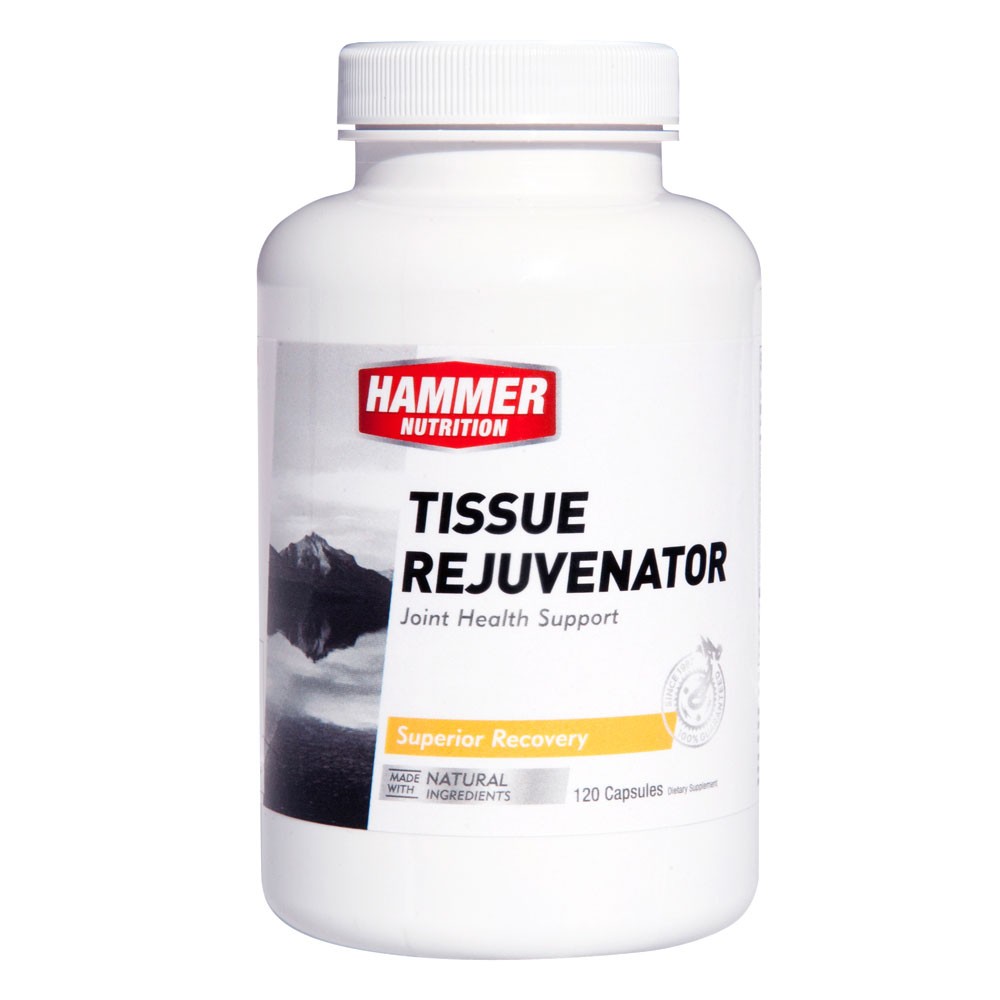
    We also have a really fantastic product from hammer brand nutrition called tissue rejuvenator  that is a natural, no drug anti-inflammatory and joint health capsule that I use frequently with my kids and use nearly daily myself.  Tissue rejuv

    If you or your kids have more specific needs or feel the need to increase supplementation in the form of shakes, creatine or specialized diets – that is more of a one on one scenario and I would be happy to help out on any of that, but it takes a professional, with a real exam and decision making and testing – I’m not going to put that kind of stuff on a generalized article.

    Hope this helps.  Don’t forget – We are the owners of ARMADILLO SPORT CHIROPRACTIC.   We have tons of things we can do in the clinic to help with injuries, pre-hab and sports performance.   We built an entire profession and clinic on young athletes and performance – don’t hesitate to give us a try.

  • Proteolytic Enzymes for Inflammation Control

    Proteolytic Enzymes for Inflammation Control

    So here I am thinking I’m pretty smart.  I was in the middle of an incredibly outdated sports rehab seminar online and just about to click off when the presented mentioned “Proteolytic Enzymes” for sports injury inflammation control.  “These work fast and immediately” she continued, “like an Advil or Aleve.   Tumeric and Omega 3’s etc, they work, but take time (weeks) to build up in your system. You can use these at the time of pain as an alternative and the results in the lab have been really good.   The results in the field have been even better.”

    That was new stuff to me.   5 years later, I use them in my own family and with athletes across the board.  You can find all sorts of brands online and at health stores.

    So far, I have had great results with “Tissue Rejuvenator” by Hammer Nutrition.  Tissue rejuv

    I’m using this in place of NSAID.

    In any case, you may feel like it’s worth a try.   So many of my clients are looking for options!

    Inflammation article 

  • Macros, the Food Plan

    Macros, the Food Plan

    Asamiamnother classic in the “how do I hack my eating” – the term Macros is getting a lot of play in the diet world again so I wanted a record of it on my site.

    Perhaps you have heard of Macros and are interested or confused or just looking to get more information of what’s out there so you can make better decisions.

    Well…It’s not new.  It’s basically been around since the very first dieting or changes in diet – like 100 years or so.

    So why now?  Didn’t macros just die like a decade ago with all the new stuff:  the keto’s, the intermittent fasting’s and the reactive foods ideas?  

    The short answer is they never went anywhere.  Macros are science. It’s the definition of your food.

    “Macros” stands for macronutrients.

    Macronutrients are Carbs, Fats and Protein.  Sometimes water will be grouped up in there.   That’s it.

    See you already know this stuff.

    Micronutrients are vitamins and coenzymes and BCAAS and many of the extras in supplements etc.    They are not a part of this. This is macros baby.

    Macros work differently depending on the ratio you organize them in your daily diet.   No matter what diet you do you are jacking with macros. You like keto? That’s a high fat, low carb diet Holmes.  Keto is macros. They all are.

    Are you fat?   Well I’m guessing your macro ratio is pretty high fat and high carbs.  That’s the combo that creates that.

    Want to get jacked?  PROTEIN (monster voice) More PROTEIN.

    It’s this easy- Change your ratio, change your body or performance or brain chemistry or life.

    “Macros” as the term, is all about nailing your ratios of how much of each category leads you to your results.

    So you track them.    You measure and calculate and plan and dial in your exact levels to get the results you want.    Maybe you need more carbs because you work out like a beast and have been really low because you’re following a keto plan.   Maybe your protein is way lower than it should be and you can’t put on the muscle you are working so hard for.

    Maybe all your carbs come from sugar and your turning into a type 2 diabetic.

    So what is it and why does it seem so difficult.     Because it’s not hard. It’s not – there’s an ap, My Fitness Plan, for one – that makes it so simple it even becomes fun.   A little fun. Ok, not fun but doable.

    Track it, plan it and change it.  Get what you want. Science. Energy.  Science energy. Proteins, carbohydrates fats, more energy than your body has room for  Run faster, lift more, impress your friends!

    Does it work?

    Yes, it works.  That being said – damn near EVERY diet plan and program work.  The problem isn’t finding a plan that works. The problem is time.   

    Jeff Olsen from the greatest book of all time “the Slight Edge” explains it best…time is the missing ingredient.   Everything in life is based about the decisions you make each and every day and compounded over time-

    weeks, months and years – doing anything, over time, gives you incredible results.

    So yes, it works over time.  

    Eating better foods over time makes you lose fat.     

    Eating more food combined with increased activity, especially muscles, gets you jacked and tan.

    Eating precisely to maximize performance works to increase your productivity and ability.

    It’s a good plan.

    Every bodybuilder on the planet becomes an absolute expert on manipulating and controlling macros – they have to, because that’s the ONLY way to become shredded!

    Oh wow, Chad, so you love this style of eating?  You love “marcos?”

    Not so fast….

    Here’s my take.  Love me or hate me for it, please start a debate in the comments section, I could use the traffic.   

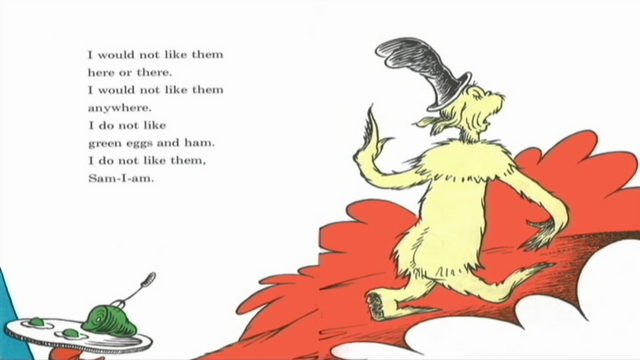
    Me?  I don’t like Macros.  And I’ll say it in the exact voice and hand gesture as Sam I Am up there in the picture.  I DO NOT LIKE MaCROS. I would not eat them with a fox, I will not eat them in a box.

    My problem?

    It’s just so…so Bro.

    Recall I’m a crossfitter.  I love the whole cornucopia of workouts and experiments and plans that accompanies crossfit.  I like the fast forward evolution. I love the silliness of it all too. The silly socks and crazy patterned shorts and yelling out a scream like I’m at a college football game just to be funny.   Most gyms frown on that type of behavior and my gym giggles like the rest of us.

    Crossfit has a very distinct “lifestyle.”   Much like other high school style “cliques” such as Goth, rockers, and Jocks you can sense a crossfitter from a mile away.   

    My point is, crossfitters stole and 100% adopted “macros” from bodybuilders as an eating plan of choice about 5 years ago and well…collectively they got RIPPED.   A no brainer..the eating plan of bodybuilders made crossfitters look more like bodybuilders. Yep, science. It works.

    But I wanted to puke every time I heard my fellow crossfitter buddies talking about their macros and how the hit their mark and were on point today.  And when I had an off workout or a slight headache immediately asked me, “Where you at?” as in “where are you currently sitting on your macro ratios today?”

    I HATED it. Ok not hated but just got sick of it.

    Macros is an eye rolling, meh, birthday gift of socks type of excitement for me.   It’s boring.

    But…it works.

    But it’s vanilla.   It takes a conscientious effort and you have to pay attention.  

    IT SHOULD BE MY DREAM LIFESTYLE OF EATING… I constantly harp on this page about paying better attention to yourself, to make yourself better.  Awareness, track it, pay attention, experiment… And Personally, I do. In almost every category in life…Except food.

    MY Problem with Macros…I just want someone to do it all for me.   Just get it all together and I’ll eat whatever when you tell me to.  It just seems so cyborg and disconnected. For me personally, It’s just such a disconnect from food.     I want my food to be more than just the components of nutrition. I want more than the macros.

    So…as I’ll preach with workouts, lifestyle, clothing, music, life…food included.

    Heck, what this entire website is built to personify:

    Whatever you’re looking into –   It has to work for YOU or it just doesn’t work.

    This style of eating takes work and takes a conscious effort, something we, as Amercians, typically lack the patience for.  It might be YOUR absolute BEST plan and it is well worth the time and effort to play with.

    I have played with it.  I have the ap and have tracked my calories of each macro and see results.

    It should be my dream system, it’s just not.    but…Now you know what it’s all about, so you can make an educated decision and hey man, if it fits for you, I’ll be seeing you and those rock chiseled abs at a beach sometime soon!

  • Being the Sherlock Holmes of Healthcare

    Being the Sherlock Holmes of Healthcare

    sherlock

    This article is going to offer two 5th grade analogies to help with your healthcare self treatment.

    I did a fairly cheesy seminar at the university last week for the athletic trainers and a few of the team docs.  I feel the addition of these simple analogies helped a lot with the understanding of how and why my decision making is done.

    I use analogies in my clinic all the time as it just helps to visualize a lot of information.   The problem with analogies for medical use is they get over simplified to the point that they often offer little value.    Cute Quips like, “Your knees are like car tires and only have 50,000 miles in their lifetime.”

    and “you can never run again after surgery.” – “I hold all my tension up here.” “slipped discs”

    Are straight up stink and are just plain misleading.

    My cheesy analogies however, are different!   Why? Because I made these up, so obviously they are legit..

    Cheesy but effective Analogy #1

    Be like a detective with your health.  

    Seriously, Imagine yourself as a two brim hat wearing, huge magnifying glass holding, British accent , aloof silly detective. It’s called a CLUE.   

    I will take this approach as a doctor often.    I think all good doctors should.

    So should you.

    Look for clues.   What can you use to help yourself with decisions in your health?

    If doing “X” seemed to make the pain 50% better for 3 days?  – wow, that’s a good clue, pay attention.

    Running seems to make it worse?   – now we’re on a path, get out the magnifying glass and ask why…- was it the distance, poor mechanics, could it have been a 50 mph gale and freezing rain in your face and not actually have anything to do with the running.   

    You need to push the envelope here and be smarter –

    Eating the #8 at the drive thru left you feeling like you ate a shoe and you were on the toilet 5-6x the following day?    That’s a clue – this tells you stuff so pay attention here – you are Sherlock Holmes here a classically trained, highly intelligent world class detective.  You’re not Mr. Magoo.

    Now look, you can’t use…”it just feels good” – that’s a misleading clue.  In Agatha Christie novels, often a creepy, evil tempered guy with perhaps a questionable past is one of the neighbors – this guy is always implicated and looked on with the stink eye…but his character is  written in the novel to throw you off the trail. Don’t buy it!

    We use crappy clues all the time in our health and follow the wrong footsteps in the mystery.   Pain is often misleading. “Feel good” is often misleading. Eating a gallon of cookies and creme to drown your sorrows in sugar laden chocolateyness is just not helping.

    Absolutely stretching the hell out of your IT band and lying on a shotput to rollout your quads on your sore legs….agh.

    Which brings me to cheesy but effective Analogy #2 –

    Healthcare Therapy and treatment should often be looked upon as a little kids bike lock.

    bike-lock

    The example meaning:  You can do all the right stuff but if it’s in the wrong order it won’t work/open.   Just like you can put in all the right numbers and the lock still won’t open.

    It needs to be in the correct order.

    I use the bike lock analogy often.  

    In the clinic and in lectures I occasionally take flak for not offering a bunch of exercises and rehab on the initial couple treatments.      This ‘bike lock’ idea is why.

    Because despite doing all the workup and treatment options, if it’s done in the wrong sequence it doesn’t work – or doesn’t work as well as it could.

    Routine real life examples:  For a lot of injuries, the inflammatory complex needs to be taken care of first.   Nothing really heals or starts on the healing process while inflamed.

    This is why I don’t offer exercises right away and typically tell my clients NOT to stretch and roll and exercise a lot immediately on low back pain injuries.

    “Doc, do have any exercises I can do?”

    “Not yet, you’re going to have to get the fire put out first. – You’re just not THERE yet.”

    As a patient, if you are at the inflammatory, “put the fire out” stage,  why would I then offer you exercises that just irritates the whole area again?

    The cart is in front of the horses.    Do this, THEN, this, THEN this – often it may come on the same visit, but in the right order.

    It’s the application of the ideas – the application, the “why” is even more valuable than the idea itself.

    And the One thing I will always have is a “why.”

    It drives my wife nuts, but I have a reason for most everything I do.   If I didn’t have a ‘why’, then for what reason am I doing it?

    Because some dude on You Tube told me too?

    Because it’s what my PE teacher told me back in High School?

    Because your friends told you that what to do?

    It’s just not good enough for me.

    So now we go full circle to the Sherlock Holmes idea again.

    You can often create your own clues or reactions by trying something the guy on YouTube says.  You have to have experience to get the ideas for what works and what doesn’t.

    If YOUTUBE ANDY tells you to roll your quads out and stretch the hell out of your IT band with a ball.  Try it. But be true to yourself…

    Did it help, hurt or no change?     Look for clues!

    Remember you can’t use:

    “It felt good.”  – that’s a poor choice and a liar.   

    Also, You can’t choose, “well it hurt so bad it must be doing something.”

    Aside from that being straight up crazy that’s a poor clue.        

    You can’t use – “I just do the same stuff over and over for months without ever looking up out of the sand because that’s YOUTUBE ANDY and my girlfriends said to do – maybe eventually it will do something.”  

    that’s an actual definition of insanity.

    You can’t use, “that’s what I did back in 97”  – well wait a second, you can.

    You tried something that worked before?  For sure, try it again. But beware, it could be a different issue this go around, so pay attention.  Did it work this time?

    “Oh Chad, This is just all so confusing, you have a BEAWESOME site, just tell me what to do.”

    That’s just lazy doctoring and terrible self treatment and dammit…it’s not good enough – I may not know exactly what you have AND aside from that, you know your own body WAY better than any outside doctor, therapist or well meaning friend.

    I’ll tell you some ideas I have – doctor advice to be viewed as “some ways to make clues.”

    “Ok, how long should all this take?   I’ve been stretching for 3 months now and no help….”

    3 months?  Sigh

    How about 4 applications?  say 4x in a week. Yep, for most non surgical, injury type issues, 4 treatments should give you a clue.  It should be promising and give you a direction if you are headed in the right path.

    Looking for clues and creating scenarios where you can gather information to make better decisions lets you take control over your own health.   

    Just WANTING to get better isn’t enough.  You need to do something, make a decision based on the response and act accordingly.  You need to try stuff and try stuff in a logical order.

    If it doesn’t work, try the opposite.  

    Have you noticed how many of my articles suggest contracting tight muscles, not stretching?  How many use ice not heat on a spasm?

    The “why” is…because I learned from experience.    I stopped doing the same thing over and over because some professor in my past told me that’s what to do.  I paid attention to what worked clinically and what didn’t. Now I even focus on, with nearly as much attention, to what works better.

    I advertise most injuries take 3-4 visits in my clinic.  For resolution. The norm is 3-4 visits per week for 6 weeks.    

    Dude!  There’s a reason!

    Doing the same thing over and over again and expecting a different result is a classic definition of insanity!

    I don’t see patients and go immediately to a preconceived treatment plan.  Not only do I not treat every client exactly the same, I rarely do the same treatment on back to back visits.    Maybe I’m not a better doctor. Maybe I’m just a better “body detective.” Or maybe I pay attention to the clues better.   Maybe I put treatment applications in a better order. What I’m certain of is that it’s an ongoing experiment – All I care about is the end result.  Get your life back!

    There’s a chance that this article was just all over the place – maybe the Sherlock Holmes and the Bike Lock analogies would have fit better into two separate articles.  I’m not sure – I’m just all about maximum effect with quick results.

    So I’ll just go ahead and press “publish” on this article as is and then pay attention to the feedback -knowing I’ll be better the next time!  

  • Return to Play Criteria for AT’s and Coaches

    Return to Play Criteria for AT’s and Coaches

    athletefootballonbench

    There is an issue that we have been seeing with Return to Play after Injury in high school aged athletes.   It’s a small issue, more bureaucracy – not actual treatment issue.  It’s the problem of athletes/patients seeking treatment outside of the school.

    I have presented this idea at high school in-services and have had good feedback and great implementation of plan improvement with a minimal effort and next to no expense.

    My proposed idea gets the athletes, coaches, athletic trainer and ancillary staff on the same page and makes discussion of injury much more thorough with a huge addition of information. This, in my opinion, allows for better treatment of injured athletes, better compliance from the athlete and an improved ability to evaluate progress while returning from an injury.

    The problem lies in, if a patient is seeing another doctor, outside of the athletic trainer’s room, the buck passes to the MD, Pediatrician, chiropractor, PT etc rather the the athletic trainer to make treatment, rehab and return to play recommendations.

    While this may seem like a great idea for administration and liability issues, it creates room for problems.

    Although I think the diagnosis and occasionally rehab/treatment for some athletic injuries and definitely for illnesses can best be managed by an adjunct doctor, the athletic trainer in conjunction with coaches is best suited to assess the athlete’s day to day recovery and return to play and practice.

    The doctor is hampered in this regard as we just don’t get to monitor day to day function and have to rely on standard and structured testing to secure our diagnosis.  Our job, as ancillary staff, is in the diagnosis. Further xrays, testing, recommendations for surgery, ruling in/out major illness etc is our job and where our expertise is best utilized.

    How long a basic sport injury keeps an athlete out of activity is not our strong suit.  

    In this article I will explain this idea in more depth with a proposed idea on how to implement a BASIC but possibly improved “return to play criteria” for your athletes.

    Let’s use an ankle sprain, in a high school track athlete, as an example.

    A junior in high school 400 m track athlete sprains her ankle while playing pick up basketball one day after practice.   

    Because the injury happened “after hours” – the parents take her to a minor ER clinic just down the road from their house.

    The doctor makes the easy diagnosis of a grade 1 to 2 ankle sprain and recommends rest, ice, compression and elevation.  Common Injury, Standard treatment.

    The athlete then gets a note for time away from activity as it’s needed for the sports participation/ athletics period etc. as well as a courtesy for the coaches and training staff.

    In some instances, this athlete may not even be able to receive additional treatment from the Athletic trainer due to the issue happening outside of the school.  That’s a shame. Most of the athletic trainers I know would still treat the athlete… however their hands may be tied due to policy.

    Before this athlete can return to play and practice, the MD that saw her must sign a note for release.   

    Typically, the parents call the clinic and say, “Can I get a note for my kid to get back to competition?”    

    That’s a fair enough request and this is how the system works on paper.  It seems uncomplicated and proper policy. The MD wrote the note and decided, based on their expertise, the treatment plan.

    And here is where the bureaucracy train starts the locomotive of inadequacy.

    The doctor, in all good conscious, cannot sign a letter for return to play or practice without first running the athlete through a set of tests again to see if the ligaments are in fact strong enough, as in enough healing has occurred, to allow for resistance and activity.  To protect the athlete from further injury.

    1. Is there a set standard – what should be done?  This is in a clinic remember, not on the field of play – this is at the doctor’s office and even this is assuming the same doctor is in the same stand alone minor ER setting.  It could be weeks before the athlete’s and doctor’s schedules even match up. Anyway, what should the doctor do in this situation?

    Just call it in?  Have the receptionist just write a note after the suggested time frame?  That’s poor doctoring, I don’t think you’ll get much of that anymore…so what else?   Feel it? Have the athlete stand on it? Run up and down the hallway a time or two? Or more commonly – just go by the standard 6 weeks! rest and no activity.   I mean, that’s safe right?   (NOTE: recovery for this injury should not take 6 weeks.)

    1. Is this doctor even qualified to make these decisions?   A license as a chiropractor, MD, DO, dentist, PA, NP etc don’t necessarily make you expert level at sports injuries.  Diagnoses? Yes. Treatments and Return to Play, not necessarily. That kind of stuff takes experience even if you did have a sports specialization – which most don’t have – not to the degree an Athletic Trainer does.
    2. Even if the athlete looks strong through the clinical exam and testing – Does that correlate well with the sports field, the track and the court?  The demands are completely different and maximal ‘game play’ exertion is unobtainable in the clinical setting.

    So let’s assume this athlete waited 6 weeks for the ankle sprain and then has been cleared medically…ahhh finally.  Well half the season has passed and now the athlete has not only been deconditioned and is behind the curve competitively but I would make a strong argument that 6 weeks of rest has in fact, not helped the sprain heal well but mostly just decreased pain.   The initial sprain has need of a progressive resistance return and strengthening program and usually sooner rather than later.

    Stated differently-  Rest may have in fact, weakened the entire joint complex at the expense of rest and pain control.    

    Again, the most qualified person to perform these treatments and exercises are an athletic trainer although I’ll allow the argument of a sports based physical therapist/ rehab specialist such as some chiropractors and even personal trainers work as.   There are qualified people, I’m just suggesting, most athletes at the middle school/high school level arent getting this.

    Communication is the key to any and all patient recovery.  It speeds up everything. But let’s not forget reality.    This isn’t the NFL and there is not an infinite resource of trained staff and doctors and athletic trainer in a one on one setting out in the field.    The athletic trainer ratio to athlete is not 1 to 1. More like 1 to 150, especially in the high school setting.

    The athlete needs help – the Athletic Trainers need help too!

    Using coaches in decision making.

    Coaches are the ones out there.  Despite not having as extensive of background to make complex medical decisions, they intimately understand body mechanics, gait, pain levels, wimpiness as well as just “knowing their athlete.”

    Coaches can tell how hard to push an athlete and any ethical coach will not want to push an athlete too far.   They need that competitor on their team!

    Coaches and Athletic trainers have much more immediate communication with both the athlete and the injury.   The athletic trainer with coaches input ARE THE BEST at the evaluation of the injury itself with regard to recovery.

    Is the athlete going to make themselves worse?   Do they need further consultation? Are they OK to move?

    Ancillary staff – chiropractors, PT’s, pediatricians, team doc, surgeons etc can work one on one to help mitigate serious risk and allow for more direct work in a one on one setting and help get through the injury itself.

    Again, my argument is that the ancillary staff is not qualified for return to play criteria.    We aren’t on the field and don’t get to see the athlete in movement and sports specific situation.

    Athletic trainers and coaches are together, the best qualified and should work together with input from the athlete on any and all return to play.

    If “passing the buck” to ancillary medical staff, plan on a generic 6 weeks rest.

    Basic return to play criteria

    Use “pennies”

    In the upper level sports teams..college and professional – the use of different colored jerseys or “pennies” are extremely common.

    These pennies allow for immediate recognition to the coaches and staff both in live practice and video that the athlete is not 100%.

    They allow for the athlete to still be present, play in correct positions, see in-play decision making for game day corrections, have movement and be participating with the team.

    Teammates can easily recognize the injured athlete is not 100% – so contact, speed etc should be appropriately controlled so as to allow for recovery.

    Coaches can evaluate practices with the understanding that the athlete is understanding week by week adjustments and is engaged mentally with the ability to digest that the athlete may not be fully functional in practice but with the understanding that by game day they may.    Reps, even at a reduced speed,contact and ability is infinitely better than no reps and I think in 2019 everyone can agree rest alone is almost never the best recovery option.

    My suggestion:  use pennies in nearly every practice.  Get the athlete on the field.

    I utilize a 6 day recovery to 100% model for low grade injuries.

    Day 1 : 50%

    Day 2 : 65%

    Day 3 : 75%

    Day 4 : 85%

    Day 5 : 95%

    Day 6 :100%

    The athlete can not go past his assigned percentage for each day.   

    If the athlete passes the day with no setbacks or recurrences he is moved up the chart to the next percentage.

    If there is a re exacerbation, the athlete stays at the same percentage for the following day or a reduction in percentage based on the Athletic Trainer’s and coach’s discretion.   

    Further therapies, rehab techniques, clinical work etc is done IN ADDITION to practice, not in substitution of.    

    Certain max ability drills such as sprints, gassers, max out weight room workouts etc are not done until the athlete can tolerate them.     The additional therapies required for maximal recovery may work into these time slots.

    By game day, the AT and the coach will have a good “working idea” of the athlete’s ability and chance of exacerbation and re-injury.

    The reality is in all sports, the athlete may not be 100% in each case.   I’m not suggesting 100% before competition as I think that’s another “on paper” reality that isn’t a realistic in the sports world.  By 6 games in to a typical high school football season, I would argue, no one is 100%. I bring this up because I had conversation with an athletic trainer that didn’t want his athlete’s seeking out my care as a sports based chiropractor because he had a policy of “100% healthy or No Play.”   This meant that if they were seeing me for a pre-game “tune-up” , it equated to being injured and he threatened to sit athletes out of competition that week.

    The reality of this is that athletes rarely would seek out treatment form the athletic trainer for fear of being benched for little tweaks or tight muscles.   They knew that if they had any reported “complaints” it was viewed as injury.

    This is a double kill situation where the athletic trainer saw very few athletes.  He could go about his day blissfully unaware of basic, simple care his teams would benefit from – completely confident that his teams were perfect with no complaints.  The actuality was no one dared seek their team’s “professional.” The coaches wouldn’t use him as they knew he would sideline their players, the parents used outside staff exclusively for the same idea and the athlete’s themselves had no confidence or even worse were scared to talk to the athletic trainer about injury or sports performance.  The best qualified member of the staff was “out of the loop.”

    Back to return to play…

    The alternative to doing what I feel is correct, is rest.  Wait for a release from a doctor that doesn’t have any way to make a decision other than allotted time, and I feel, a significant chance of reinjury, as the athlete has had no ability to re adapt and prepare for the demands of competition.

    I understand there needs to be policy.  I understand that policy at certain districts are at odds to my proposed ideas.   Understand this is a very generic, very vanilla return to play criteria offering an improvement in the current status quo with minimal effort level.   It benefits the athlete, the team, the coach and the training staff. It isn’t created to circumvent policy but to focus on the fact that the sports arena as a whole has a lot of gray areas and a one policy for all is a dangerous concept and often not in the athlete’s best interest.  

    Obviously, any criteria for an injury and return to play is a case by case scenario and should be adapted for each individual case to best match the needs.

    My points…

    We are having the return to play being either negated or done subpar in cases.

    Often it is by the wrong provider based on circumstance and perhaps policy.

    Policy should reflect what is best for the athlete, not be based on the degree of the practitioner.   

    I argue that the Athletic Trainer with help from the coaches is THE BEST qualified people to create and implement return to play criteria, not a note from an ancillary provider.

    Communication helps.   Use the information from the ancillary staff to help make better informed decision in certain cases.   A text or quick call makes a huge difference.

    Return to Play can be fairly simplistic and done in a way that benefits…EVERYONE.

  • The Trouble with Hips

    The Trouble with Hips

    38934856 - femural head pain - hip injury concept

    I had a friend in the other day who is also a client.  He was having hip pain. A doctor friend we share sent him to my clinic to see if I could help him out with the pain he was having and help him out with a diagnosis.

    The doctor was sure it was a sciatic issue, the old school type version.. “piriformis syndrome.”

    Now you guys that have been in my clinic before know that hips are my baby.   I feel very good at my Diagnostics and my treatments, especially the hips. We go the extra mile in here to keep it Cutting Edge and much of what we diagnose and treat is different than classical presentation.

    The ideas of not stretching the tight muscles on the back side  and things like glute activation and hamstring activation, which has been around for about a decade but still hasn’t trickled into mainstream therapies.  These treatments are legit despite Tiger Wood’s gifs making fun of his ‘glute activation” before a major years ago.

    Back to my patient:

    I went through the exam and evaluation and presented my evidence for why I thought this and that.   I worked this patient’s up and despite me thinking it would take two to three visits, he actually left the office feeling nearly 100% better.

    My diagnosis?   a low-grade bursitis with hip Mis-position,  or more properly termed lack of proper movement,  anterior hip muscles that were tied up and tight because they were short and adhered to each other,  consequently causing the back side muscles of the butt and hamstring to be tight because they were elongated and overstretched.

    I know, that’s a mouthful.

    Any of you that have been to my clinic or read any of my articles on Muscle Recovery or seen any of my rehab videos… you get it.    my diagnosis are long and quite descriptive but on the same hand are rarely scary or quipped, and typically not something simple enough that you can Google it and get a one word answer on  treatment. -Basically it’s -, this guy has a bunch of little things that are compounding on each other and making his life miserable. None of the things are serious, but if treatment is done for any one of his problems the issue will not get better.

    The resolution of his issue takes Chiropractic or rehabilitative napalm.   Each and everything needs to be done, and it needs to be done in the proper order.   The analogy I use when teaching lectures for this type of issue is that it is like a little kid’s bike lock.   All the numbers can be put in but if it’s not done in the correct order the bike lock will not open ie any of these treatments can be done but if they are not all done together and in the correct order you don’t get better.

    So I worked this guy over… in my typical fashion I explained it all.  I made it all very simple to understand by explanation.

    Simple explanations need explanation.  That’s what makes it simple..

    Now this patient is a nurse and works alongside our doctor friend doing surgeries each morning.

    The next day when he came back to work, the doctor asked him how he was doing and what I thought was going on and the patient  explained it.

    The doctor scoffed, told him I was full of s*** and that it was a simple piriformis syndrome and he should do the figure 4 stretch at home.  Basically, the opposite of what I explained over 20 minutes. But it was simple and easy to digest. It took 5 seconds, not 20 minutes. And…he’s a doctor.

    So the patient did what this guy told him to do.    And the pain returned immediately.

    Which leads me to this particular write up.

    The trouble with the hip is,  it’s complicated.

    There are a lot of moving parts and a lot of attachments and because of the attatchment points of the hip flexors and the glute muscles, this area is perhaps the most important part of the body to have working correctly.   Calling something by a simple name and then giving it a simple stretch isn’t going to work. Just ask your friends, the marathoners and triathletes. Every one of these guys has had either a hip issue, a knee issue, IT band issue, a back issue or their  running is just off track. They’ll never stop talking about it. You just want to enjoy a beer at the BBQ and you get cornered by Todd over there pummeling you with his groin problem and then showing you his ass…Todd actually wants you to feel his strained glutes?   WTF TODD? Back off!

    Most of them will also swear that their specific stretch or Release Technique or chiropractor or foam roller or whatever magic potion they have is the answer and will 100% relieve their condition and restore their Mobility in….say 8 months to a year.

    It is so much simpler than that.   8 months to a year is for crazy people –  let’s start to get a hold of this issue and make the fix much faster.

    Typically three to four treatments and approximately six minutes of rehab done everyday for about 2 weeks for most cases.

    Let’s dissect this case and see if it makes sense.

    The patient presents with right hip pain with running or sitting or changes in position.

    The pain is along the back side of the patient’s hip bone where the butt and hip come together.

    Now I live in Texas.  Until I moved here, I had always assumed the “hip” was the anatomical hip – where your hand would be if you put your hand in your front pockets.    In Texas for some reason, often times the hip is thought of where your hand would be if you put your hand in the back pocket. Your pelvis or butt… someone explain this to me – I have no idea.   But in my clinic, I do need to clarify.

    For this case I really don’t care what hip you want to use because you can have pain with this similar issue practically anywhere in your lower body.

    A good doctor or therapist should be at least half – a good detective first.   Use Sherlock Holmes, or Hercule Poroit skills to look for Clues to unravel the mystery of this patient’s problem and Solve the mystery.

    So, at this part of the patient visit I start asking questions looking for Clues.

    Does the pain get worse with activity?

    Does it hurt to go upstairs?

    Does Advil or Aleve or a steroid pack seem to make the issue better?  

    Does it feel better if you rest?

    I also check his range of motion,  his muscle tension, his reflexes and other medical stats such as blood pressure, heart rate Etc – all the typical doctor stuff.

    Because anti-inflammatories greatly affected his issue and made it better AND a previous steroid pack over the course of seven days nearly completely resolved the issue for about a month –  I can say with relative certainty that he has some sort of inflammatory issue. His clues gave me the information to make this educated guess. Anti-Inflammatories worked, it must be inflamed.  

    Inflammation in the hip is typically bursitis,  although there could be other factors going on such as a spur or something serious such as a tumor or condition called AVN.

    In this case I had an x-ray and we could all but rule out a tumor and AVN.

    So great… he has bursitis.   I get a gold star for solving the mystery and getting a test question correct.    But a diagnosis alone doesn’t help this patient at all. He came to me for a diagnosis AND treatment  so let’s continue.

    When I test his range of motion,  he has virtually no internal hip rotation which would suggest that is hip is in fact jammed upward in the socket a bit.    Because of this, or possibly due to this, he has the muscle spasm on the front side contracted, his hip flexors and quad.   The muscles on the back side, his butt, are longer than they should be because the hip is rotated internally and can’t go any further.

    Visualize the ball of the hip being positioned in a corkscrew fashion, UP AND IN.

    The little fat pads that are between the ball of the hip and the cup of the hip are named, the bursae.   And inflammation is called itis. Added together bursa + itis or bursitits.

    Because the hip is jammed up in there- every step this guy takes,  especially activity which has multiple fast STEPS, would cause multiple irritation to the bursa.    In a case like this I really don’t care which came first the Bursa irritation because the hip is off or the muscle imbalance causing it all…it’s a chicken or the egg type argument.   They all work together to create a cycle of misery and make correcting the issue with one treatment nearly impossible.

    Remember,  this guy took a steroid pack,  which is an anti-inflammatory, and his pain all but disappeared.    the inflammation was gone and therefore the pain was gone as well. But nothing was done with the steroid treatment to actually fix the issue.  It just gave us some info…some clues.

    His hip was still jammed up,  the muscles were still out of balance,  and as soon as the anti-inflammatories were out of his system- the cycle continued and the pain came right back.

    Hopefully this description makes it quite easy to see how it typical musculoskeletal issue has a lot of other parts associated with it.

    If all I do is give this guy a stretch,  it’s really not much of a different treatment than just giving him a steroid pack.    It’s only addressing one part of the larger complex. His cycle of pain can’t be broken because we’re not doing enough to disrupt the cycle.

    How would I fix an issue like this?   a bursitis/ sciatic/ hip mobility/ muscle imbalance issue?

    By attacking all aspects.

    Let’s get the  inflammation off the hot bursa,  move the hip into a better position so there isn’t any grinding which would reactivate the bursa irritation,  balance the muscle so the patient was less apt to start the cycle over again. I would like to give this guy some rehab type exercises to basically stretch or down-regulate the tight muscles on the front side of the hip,  and turn on or upregulate the weak stressed out muscles on the back side.

    I mean it’s a full paragraph,  but a pretty basic and easy Treatment if it is explained to you in full.

    It just took a little explanation and now you are all damn near experts at the hip.  Hey Todd, take this! POW!

    Now, the mind blowing part – the BEAWESOME 365, I can about your life type part.

    The entire idea of this article is not to treat your hip, or your shoulder, or your sore back but to understand that simple answers for complex issues almost never work.   I would argue that in fact, simple answers and simple treatments create more trouble because we no longer have good Clues. We have Misinformation and bad information because we try half-ass approaches to issues in our life and then think that these approaches didn’t work.  This happens in life – with most all of our simple one answer decisions. Diets that do or don’t work, financial plans, workouts, health, relationships, movie choices, whatever. It takes a little more thought.

    So back to my hip guy for a second.. What happens to my patient when he gives up on treatment because he has two doctors basically telling him two different things and it’s confusing?   He decides to do nothing. Six months later he still has the issue. He now decides to get an MRI. The MRI is done to his lower back, not his hip when he was having the issue, but to his back because he relates to his new doctor that none of the hip work he had tried has had any results.   Note: by this time it’s typically his 5th or 6th doctor.

    Anatomically, the nerves from the lower discs in the lower back travel into the hip.    So maybe the discs are screwed up, and the nerves are being irritated and that’s why he has hip issues.

    This train of thought happens every day.   Thousands of times.

    Sure enough the MRI reveals low-grade disc issues most often called disc degeneration.

    aha more clues,  that must be where his issue is coming from.  

    The trouble is, this particular patient was 61 years old.   I would argue that 95% of people over 30 years old probably have a low-grade disc issue evident on MRI.   Usually, It’s not a big deal. When the discs are actively injured, often called a hot disc, or in years bygone a “slipped disc”,  the issues are nearly unbearable and cause tremendous pain.

    But when the issue is resolved and the inflammation is gone there really isn’t a disc issue anymore despite there still being disc findings on MRI.

    So what just happened?    We went down the wrong path.  We obtained a new information,  but information not so much related to this case.   It’s evident, but probably not causative. In the detective books, it’s like a known bad guy living next door, but he wasn’t the killer.

    In our story, Treatment down the wrong path begins.   Our hero starts treating his simple hip issue as a low back disc issue.   As a betting man, I would say the chance for success of treating his hip issue with low back disc protocol is pretty low.    On any given time line however the human body will self-correct and he will start to feel a little bit better.

    All along, having a pretty simple fix in his back pocket – which SHOULD have been saving him time money and months of misery.

    This entire case guys is not so much supposed to be “Doctor Chad’s clinical case studies”   although I like doing this stuff, if you want more just ask. No, this is but an analogy for things that may be a bit mixed up in our lives.    Hopefully you liked learning about the hip but the take home point – is in LIFE, get better information. Test what works and what doesn’t work in your life.   Try multiple approaches at the same time . Take expert’s advice and opinions and make decisions based on how those opinions and advice work for you… or…. don’t work for you.

    But Above All Else,  try not to look for simple easy -push- button- magic- pill- fixes for the things that are messed up in your life.

    Most often all it’s going to take are small easy steps from multiple angles.   As my last patient stated, that happened to have the same hip issue, “I knew it was all connected.”

    Bingo.   Life is more like a spider web of interconnection than a straight linear line.   It’s always connected, no matter what IT we’re discussing.

    My second point:

    Just fixing the pain isn’t fixing the problem.   The steroid pack made my patient’s pain completely disappear.    The problem was still there, however.

    In life often times we disregard the problem for the quick fix,  The feel-good and the cheap Buzz.

    Tackle the problems. It’s nearly always easier that way.   Or better stated, It’s the same amount of effort to fix IT as not to fix IT.